It’s easy to go overboard at Christmas, but there are plenty of ways to cut back on the amount of plastic and other single-use materials you use.
Here are three crafts that’ll make the festive season a little more eco-friendly.

Holly is an iconic Christmas decoration. But did you know it’s also an important winter food source for Britain’s birds and small mammals?
It’s easy to go overboard at Christmas, but there are plenty of ways to cut back on the amount of plastic and other single-use materials you use.
Here are three crafts that’ll make the festive season a little more eco-friendly.
Read on to find out how to make a natural Christmas wreath, how to wrap presents in an eco-friendly way and how to make a plastic-free alternative to tinsel.
Christmas wreaths are great decorations to make at home. However, lots of methods for making them suggest using non-biodegradable and single-use materials such as floral foam.
It’s entirely possible to make a wreath without these. In fact, you’ll be able to compost this one at the end of the festive season. Any materials that can’t be composted can be reused next year.
You’ll need:
1. Find a spot where you have permission to collect foliage.
2. Put on your gloves and carefully pick some foliage that is varied in size, colour and texture, including branches, twigs, berries and pine cones.
3. To create the base of the wreath, select some of the larger, more flexible branches. Bend them into a circle and secure with twine.

4. Use your remaining foliage to build up the wreath. Working around the circle, tie on smaller branches and leaves. Make sure you’ve got plenty of overlapping branches and leaves so there are no big gaps – remember to check the wreath from all angles.
5. Weave in any loose ends around the edge and decorate your wreath by tying on pine cones, feathers or other items you’ve collected.
6. As a finishing touch, tie on a ribbon and use it to hang your wreath for all to admire.
7. When you take your Christmas decorations down in January, don’t forget to compost your wreath. Remember to remove any items that can’t be composted first – save these to use when you make your wreath next year.

When collecting greenery for your wreath, remember that cuttings of evergreens, such as conifer and holly, will last longer.
If you collect ivy and berries, make sure they’re kept away from children and pets as they can be poisonous. Also, remember to collect in moderation – while they’re a pretty addition to our decorations, berries are also an important food source for birds in winter.
Try to use twine and ribbon made of 100% natural fibre, such as cotton. If you use non-biodegradable materials such as nylon, carefully detach them from the wreath before composting and try to reuse them next year.
Presents are a big part of Christmas, but tape, wrapping paper and gift cards are often made of or contain non-biodegradable plastics, such as glitter.
Here’s a way to go more eco-friendly and make your gift stand out under the tree.
You’ll need:
1. Head outside to collect leaves and pine cones that you’ll use later to decorate your present.
2. Back inside, roll out your brown paper on a flat surface. Weigh down the corners to make sure it can’t roll back up.

3. Select a leaf with a clear shape. A fresh or very recently fallen leaf will work much better than one that’s dry and crumbling. Cover the leaf with paint on one side.
4. Press the leaf onto your brown paper like a stamp. Carefully peel it off so you don’t smudge the pattern. Repeat this process all over the paper until it’s fully decorated, and leave it lying flat to dry.

5. Once the paper is dry, use it to wrap your presents. Instead of using plastic, non-recyclable tape, fold the paper around the gift and secure it in place with twine or cotton ribbon. Alternatively, try brown paper tape to match your wrapping paper, or washi tape for a splash of colour.
6. Using the foliage you collected earlier, tie some decorations onto your present to make it stand out.
7. For a gift tag, you could write a Christmas message on a large leaf or just write directly onto the wrapping paper. Then, pop the present under the tree.

When printing on the brown paper, make sure you’re working on a wipe-clean surface, just in case of any mess.
Instead of painted brown paper, you could wrap your gify in a natural fibre material secured with a knot or twine. You could also place presents into a reusable tote bag, which can then be a bonus gift.
For decorations on your present, as with the Christmas wreath, cuttings of evergreens will last longer.
If you’d like to reduce the amount of plastic you use at Christmas, making your own decorations is a great way to start.
Follow our guide to make a plastic-free alternative to tinsel that you can bedeck your home with.
You’ll need:
1. Start by peeling the oranges. Try to leave the skin as intact as possible.
2. Use your cookie cutter to carefully cut out as many stars as you can from each orange peel.

3. Use a skewer to make a hole through the centre of each star.
4. Thread the twine onto the yarn needle and pull it through each of the orange stars. Space the stars out evenly on the string.
5. Hang your Christmas garland up in your home. As the peel dries, it’ll shrink a little and become preserved.

Get creative with the shapes you use for your garland. For example, you could try Christmas tree or holly leaf shapes instead, or use stars in a mixture of sizes for some variety.
If you don’t have cookie cutters, use pen or pencil to draw your chosen shapes on the orange peel and cut them out with scissors or a utility knife. Make sure younger crafters have adult supervision when using sharp tools.
Looking for more ways to reduce the amount of single-use plastics you use? Or perhaps you’re searching for the perfect present for an eco-conscious person in your life?
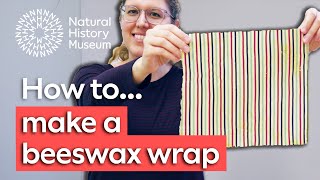
Homemade food wraps are a popular choice for replacing cling film and are very quick to make. Find out how to make beeswax wraps.

Biodiversity is connected to almost every aspect of our lives, but it needs our help. Small actions can make a big difference.

We're working towards a future where both people and the planet thrive.
Hear from scientists studying human impact and change in the natural world.



Don't miss a thing
Receive email updates about our news, science, exhibitions, events, products, services and fundraising activities. We may occasionally include third-party content from our corporate partners and other museums. We will not share your personal details with these third parties. You must be over the age of 13. Privacy notice.
Follow us on social media