
We know you expect your water company to make the local rivers and seas cleaner, ensure your drinking water remains amongst the best in the world and improve the service it provides.
It is time for them to show that they can meet this challenge – and with the record amount of money we are allowing them to spend over the next five years, we expect rapid and substantial improvements for both customers and the environment by 2030.
Below, we explain what our announcement about our price review means for you, your bill, and your area.
Tap or click on the links below to jump to the relevant section or keep scrolling to read this article in full.
We answer your questions
Find your water company
Water and wastewater companies:
Water only companies:
What are the main points from the 2024 price review?

We’ve approved substantial improvements for customers and the environment through a quadrupling of investment for the water sector over the next five years.
90% of this funding will go towards meeting new requirements set by the Environment Agency, Natural Resources Wales and the Drinking Water Inspectorate.
These relate to a range of programmes, such as reducing spills from storm overflows, improving wastewater treatment standards and raising further the quality of drinking water.
To help to finance this essential investment programme, bills in England and Wales will increase by an average £31 per year before inflation between now and 2030.
We will monitor and hold companies to account on delivering their commitments.
Why is my water bill going up?
Our job is to scrutinise water companies’ investment plans, to get the best possible value for customers in England and Wales.
In a price review, companies share their five year plans with us, explaining how they will deliver improvements to their services to customers and to the environment, in line with the expectations set out by the UK and Welsh governments.
And we set limits on what companies can charge customers for the next five years.
To help to finance essential investment in the water sector, which includes meeting new environmental requirements, bills in England and Wales will increase by an average £31 per year between 2025 and 2030.
This is £8 lower per year than what companies proposed in their plans, on average.
We have ensured bills are fair, reflecting the investment being made by companies, and we are spreading the costs across current and future customers
We also make sure that customer bills are not any higher than they need to be. If companies do not meet their targets or fail to deliver the outputs they promise, they must return money to customers through lower bills.
What help is there if I’m worried about paying my water bill?

We know it is a difficult time for many people and the impact that an increase in their water bill will have for some.
We have been clear that water companies must improve support for customers.
Every company provides support for customers struggling to pay their bill, including with reduced charges (known as ‘social tariffs’) and debt support schemes, and are increasing support for those who need it.
You can find out more information on the website of CCW – the independent voice for water consumers in England and Wales.
Earlier this year, we introduced new powers to act if a company is not meeting our standards for customers, including those who are struggling to afford their bill.
We now have the power to act when a company is not meeting these standards.
Will my bill go to pay water bosses’ bonuses and dividends?

We have new powers that allow us to stop customers’ money being used to pay for executive bonuses and dividends, where companies cannot show they have delivered better outcomes for customers and the environment.
Over the next five years, we will continue to use these powers so that the public are not paying for bonuses and dividends when they haven’t been deserved.
What are you doing to stop companies dumping sewage into our rivers and seas?

We have worked closely with environmental and water quality regulators so that our decisions in this price review allow water companies to meet long-term environmental targets and tougher statutory and regulatory standards.
The overuse of storm overflows cannot continue.
Over the next five years, companies will spend £12 billion to rapidly improve their performance and clean up our rivers and seas.
We will continue to work with other regulators to hold companies to account on their performance: if they do not meet their storm overflow targets, we will hold them to account, including with financial penalties.
How much is my new water bill – and what is my water company promising to do in return?
To help finance the essential investment in the environment and in their service to customers, bills in England and Wales will increase by an average £31 per year between 2025 and 2030.
We have set out the cost of the average bill for your water company, and the highlights of what they will deliver in return.
You can read more in depth about each company by tapping or clicking on the relevant link underneath the graphic.
Water and wastewater companies:
Water only companies:
Anglian Water

Read our full summary of Anglian Water’s PR24 final determination
Dŵr Cymru

Read our full summary on Dŵr Cymru’s final determination
Hafren Dyfrdwy

Read our full summary on Hafren Dyfrdwy’s final determination
Northumbrian Water

Read our full summary on Northumbrian Water’s final determination
Severn Trent Water

Read our full summary on Severn Trent Water’s final determination
South West Water

Read our full summary on South West Water’s final determination
Southern Water

Read our full summary on Southern Water’s final determination
Thames Water

Read our full summary on Thames Water’s final determination
United Utilities

Read our full summary on United Utilities’ final determination
Wessex Water

Read our full summary on Wessex Water’s final determination
Yorkshire Water

Read our full summary on Yorkshire Water’s final determination
Affinity Water

Read our full summary on Affinity Water’s final determination
Portsmouth Water
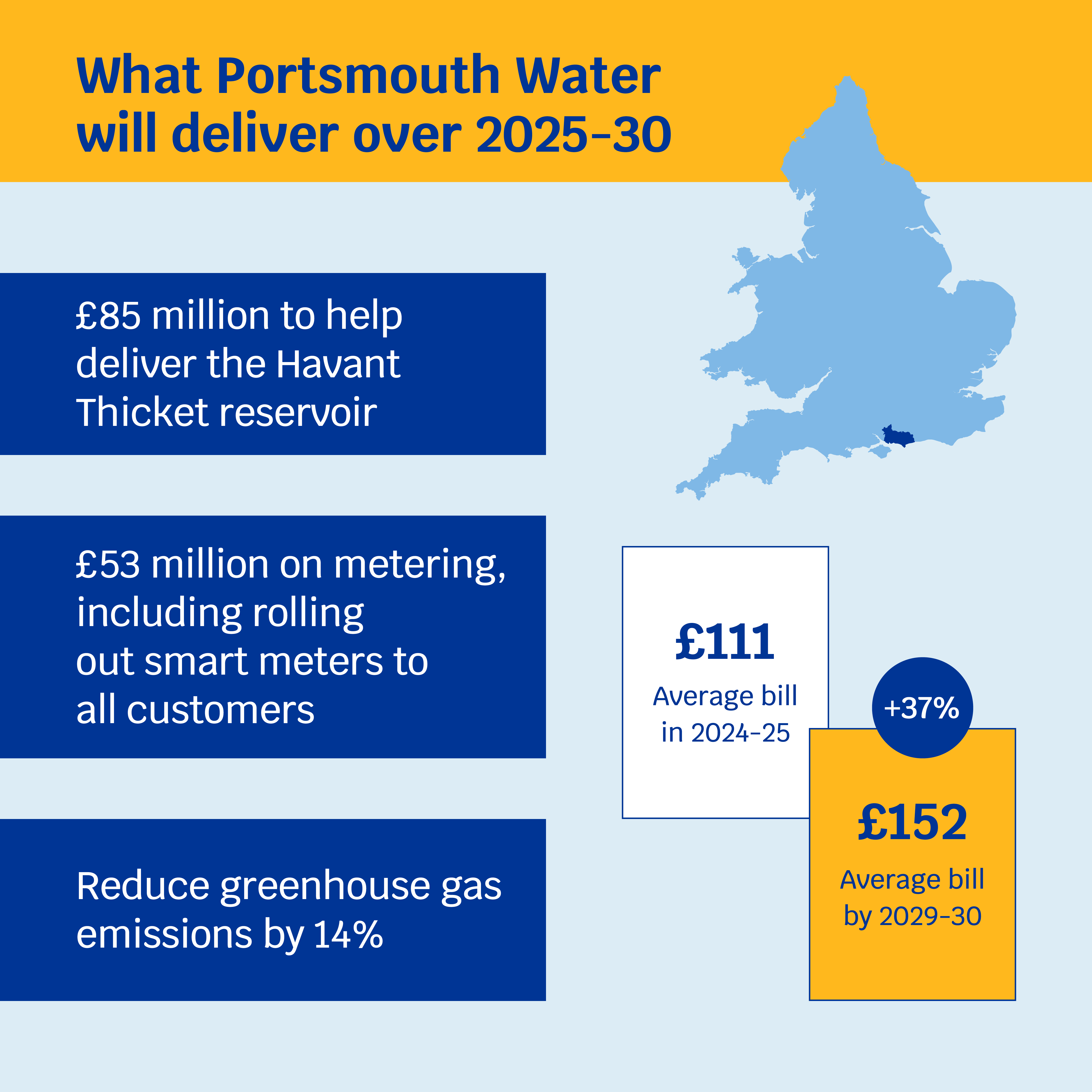
Read our full summary on Portsmouth Water’s final determination
South East Water

Read our full summary on South East Water’s final determination
South Staffs Water

Read our full summary on South Staffs Water’s final determination
SES Water
