Going 10X: Using hackathons to kickstart government AI development and adoption

Head of AI Capability
15 July 2024


This summer, we ran our “10X” generative AI hackathon at Imperial College in London, with over 200 technologists from across government coming together to tackle governments’ knottiest problems using AI - our largest hack yet. 18 months into our Evidence House Programme we’re really excited about what our community has achieved, and there’s plenty more to come!
Here at i.AI, our mission is to do more than just build products with AI: we want to work with all of government to transform how we deliver public services, and bring together our incredible digital and analytical community to ideate, build and deliver AI solutions to the trickiest problems facing Britain today. Our “10X” hackathons are a key tool we use to deliver on that mission.
Run through our cross-government upskilling program, Evidence House, our hackathons aren’t just an opportunity for civil servants to learn about AI: they’re where we test novel ways of solving problems with AI, and feed directly into our growing library of use cases for “AI for Good”.
This summer, we ran our biggest hackathon yet, with over 200 data scientists, developers and AI engineers from government, private sector and academia joining us for 3 days at Imperial College in central London.
This was (we think) the biggest ever government AI hackathon: participants competed in over thirty teams, collaborating across government departments and professions to drive innovation. Thanks to our industry partners, they also had the chance to apply the very latest models, tools and technologies, with teams from Anthropic, AWS, OpenAI, Google and Microsoft supporting the participants and showcasing how to best use the latest and greatest AI tools, and successful founders from YCombinator and the AI Tinkerers community showcasing how they’ve used AI to make meaningful change.
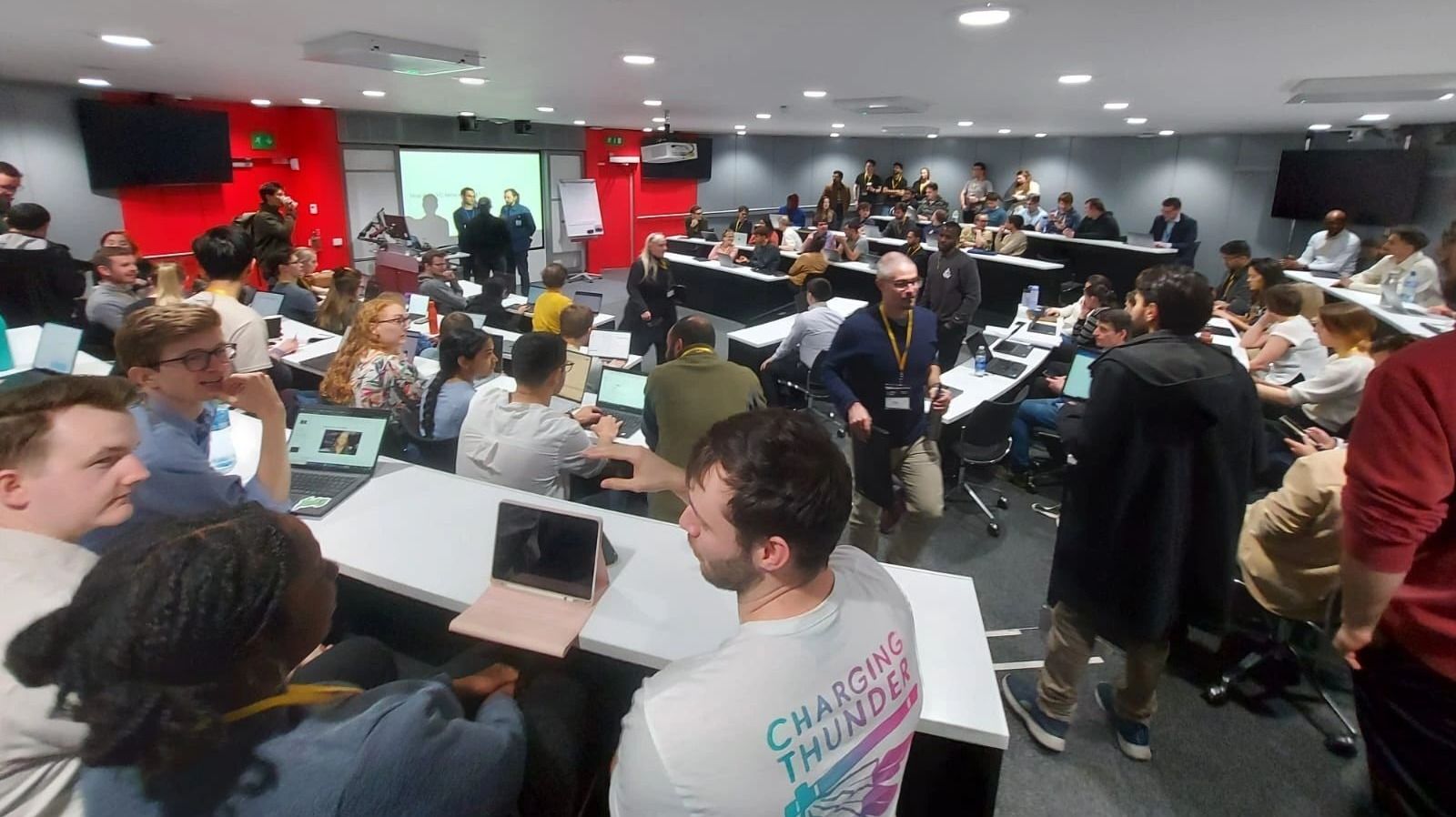
Our hackathons aren’t just about programmers and developers though: each team was set on some of the government's knottiest problems, and paired with colleagues in operational or policy fields from across the civil service.
Our hack challenges…
- Ministerial Correspondence : Help government and No10 manage and act upon incoming handwritten correspondence
- Emerging Situations and Crises : Help the National Situation Centre react to new and emerging biosafety threats
- Legislation : Write better legislation, with better evidence, that’s better understood
- Communications : Brief the Prime Minister and help us deliver effective and informative communications
- Meetings and Transcription : Understand, digest, summarise and actionise meetings across the civil service
- Major Projects : Measure, manage and deliver government major projects
- Grants and awards : Ensure government effectively distributes grants and financial assistance to those who need it
- Skills : Make sure the UK economy is ready for the AI led skills revolution
Our hackathons always end with a “dragons den”, where the participants pitch their ideas (and live demos) to our panel of illustrious judges who pick the very best entries to triumph. This hackathon was our busiest, and most impressive field yet, with 34 incredible prototypes presented to our panel on day 3.
You might think not much can be accomplished in 2 days of building, but our participants built some incredible prototypes with real innovation. To help improve how we write legislation, teams created teams of AI drafters, all working in parallel to craft entire sections, before coming together to form entire acts in minutes. To support our response to emerging pandemic threats, they built automatic scraping algorithms that would find, read and digest news articles to map out new threats. By looking through datasets of grants, they helped automatically identify suspicious companies, flagging them to civil servants to prevent losses to the taxpayer.
 Audio described video
But there can only be one winner, and this time, it was the team behind the Career Advice, Resources and Learning assistant (CARL). CARL uses a database of job adverts, provided by our friends at Nesta, to help identify the skills most critical for the workforce of the future, and provides jobseekers with their very own AI concierge to help find the most appropriate role for them. An honorary mention went to the Ministerial Dispatch Automation System (MiDAS), which automatically reads and flags correspondence to Ministerial offices, helping respond to the 250,000 items currently being replied to through a manual process.

These prototypes aren’t just throwaway ideas, and our hackathons aren’t just 2 days of fun: they feed directly into i.AI’s ideation pipeline, and help us identify promising new products that we can use to revolutionise how we deliver public services. Last year, at our generative AI hackathon at City University, the winning entry was a digital Redbox - since then, we’ve been working to scale the prototype, collaborating with partners from across the government, including the winning team. That’s since grown into our flagship product, which is being tested by civil servants across government.
We know there are plenty more opportunities and ideas out there, and we’re only getting started. In the coming weeks, we’ll be coming together with colleagues from DSIT, CDDO and GDS to form a digital centre of government, giving us an unique opportunity to make our next hackathon bigger, better, and let ever more people take part. If that sounds exciting, make sure to keep an eye out on our social media in the coming weeks, and we’ll hopefully see you at our next hack soon!