

What's on at the British Museum in 2025/26?
Find out more about the British Museum's upcoming experience and special exhibitions.
Experience a dazzling celebration of the artistry of Hawaiʻi, discover the shifting history of the Japanese samurai and behold the medieval mastery of the Bayeux Tapestry – coming to the British Museum in 2026.
Introduction
We also have dates for our thought-provoking free displays, ranging from a journey through Islamic mysticism to a historical examination of three medieval vessels – as well as showcases of prints and drawings including Italian Renaissance woodcuts, portraits from 17th-century London, contemporary drawings by Edward Allington and graphic works on paper from the Nordic region.
Plus, if you can't get to London, the Museum has touring exhibitions which you can see at our partner venues – find out what's on in the UK. You can also explore the diverse collection from home with the British Museum Audio App.
Sign up to our emails to be the first to know when tickets go on sale – and to catch our early bird discounts.
Get access to the Museum's exhibitions and a range of other exclusive benefits as a Member.
Experience
The Bayeux Tapestry
10 September 2026 – 11 July 2027
Room 30: The Sainsbury Exhibitions Gallery

The 70-metre Bayeux Tapestry depicts the 1066 Norman invasion and Battle of Hastings. The Museum will draw on its own collection as well as other loans to tell a rich story about this period of history.
This will be the first time that the Tapestry has been shown in the UK since it was made, almost 1,000 years ago – and is expected to be one of our most popular exhibitions ever. The British Museum's status as the UK's most visited attraction, as well as one of the most popular in the world – attracting 6.5 million visitors in 2024 – means it's well placed to ensure that the widest possible audience will have the opportunity to enjoy it.
The agreement, which will provide immense cultural and educational benefits for citizens in both countries, was announced by UK Prime Minister Sir Keir Starmer and French President Emmanuel Macron, and signed by Director of the British Museum Nicholas Cullinan.
Find out more about The Bayeux Tapestry.
Special exhibitions
Korea
1 October 2026 – 31 January 2027
Room 35: The Joseph Hotung Great Court Gallery
Supported by the National Museum of Korea and Ministry of Culture, Sports and Tourism of the Republic of Korea

Discover the story of Korea's distinctive and vibrant arts – from 300 BC to today.
This expansive show draws exclusively from the 23,000 works donated by the late Samsung Chairman Lee Kun-Hee to the National Museum of Korea (NMK) and the National Museum of Modern and Contemporary Art, Korea (MMCA) in 2021. The collection, which includes many objects designated as National Treasures, spans more than two millennia and is renowned for its exceptionally high quality.
Featuring standout examples of sculpture, painting and decorative arts from the Bronze Age through to the 20th century, the exhibition will present the most comprehensive chronological span of Korean visual and material culture seen in Europe since Treasures from Korea: Art Through 5000 Years, held at the British Museum in 1984.
From ancient goldware to ritual Buddhist instruments, and from celadon-glazed 13th-century stoneware to contemporary works responding to the turbulence of the 20th century, the objects on display tell a truly panoramic story of the history of Korea. Originally created for a range of settings including royal palaces, Buddhist temples, Confucian academies, scholars' studios, vibrant spaces of daily life and modern art spaces, most of the objects have never been seen in the UK before.
Find out more about Korea.
Hawaiʻi: a kingdom crossing oceans
Hawaiʻi: a kingdom crossing oceans
15 January – 25 May 2026
Room 35: The Joseph Hotung Great Court Gallery
Supported by Lynne and Marc Benioff

Hawaiʻi: a kingdom crossing oceans is a dazzling celebration of the artistry and history of Hawaiʻi. The exhibition brings together remarkable objects – from feathered cloaks worn by chiefs and finely carved deities, to powerful shark-toothed weapons and bold contemporary works by Kānaka ʻŌiwi (Native Hawaiian) artists.
In 1824, the young King Liholiho and Queen Kamāmalu travelled across vast oceans on a journey that would mark a turning point in the history of their kingdom, Hawaiʻi.
The exhibition commemorates over 200 years since this ill-fated royal visit. A compelling story of movement, alliance and cultural exchange – past, present and future – the show sheds light on Hawaiʻi's history and culture through an exploration of the complex and enduring relationship between the Hawaiian and British nations.
Building on years of collaboration with Native Hawaiian artists, practitioners and scholars, the show centres on indigenous knowledge, shining new light on exceptional objects and extraordinary stories. Shaped together with Hawaiian knowledge-bearers, the exhibition showcases seldom-seen international loans alongside the remarkable collections at the British Museum – one of the largest in the world outside of Hawaiʻi.
Find out more about Hawaiʻi: a kingdom crossing oceans.
Samurai
Samurai
3 February – 4 May 2026
Room 30: The Sainsbury Exhibitions Gallery
Supported by the Huo Family Foundation
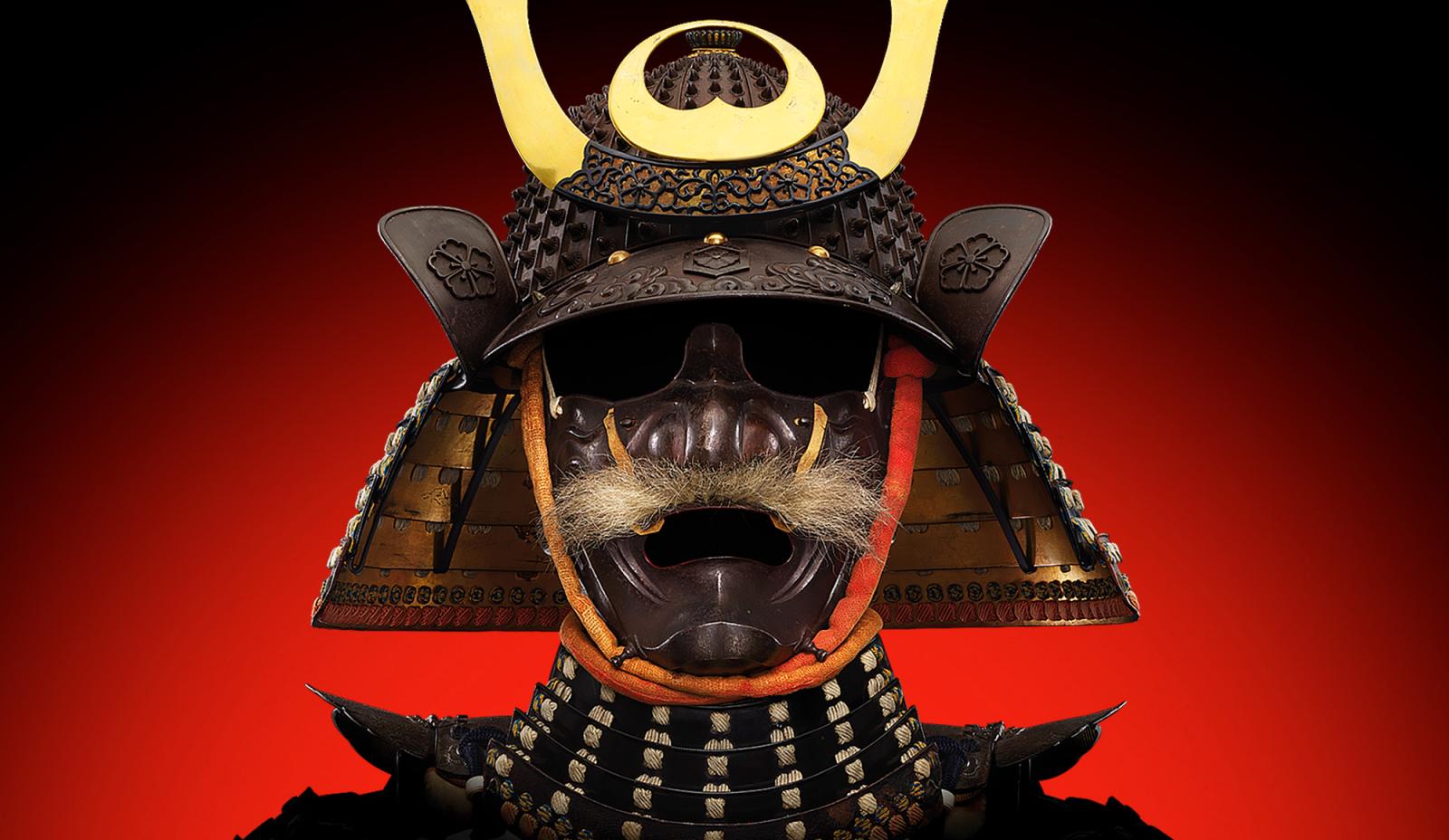
The samurai is an iconic figure across the world, standing for ideals of courage, honour, self-sacrifice and loyalty, and serves as a defining symbol of Japan. Samurai have played a large range of shifting roles in Japanese society throughout history, but much of the common understanding of 'samurai' today is a myth.
From the medieval period, right up to the present day, the concept of the 'samurai' has been fabricated, idealised, adapted and co-opted for a range of purposes, both within and outside of Japan. The story of the samurai encompasses a millennium of myth and reality.
This groundbreaking exhibition will guide visitors through the shifting history of the samurai and their representation, tracing their transition from mercenaries to the ruling class during the medieval period, from bureaucrats in the 17th to 19th centuries, to their representation as a patriotic, martial ideal in the early 20th century, and finally to the (anti-) heroes of pop culture from the 1950s onwards. Armour, weapons, clothing, paintings, books, ceramics and photographs will be on display, as well as film and TV clips, manga, video games and contemporary art.
Find out more about Samurai.
Installation
Tapestry of trees
16 May – 2 June 2026
Museum forecourt

This outdoor installation by acclaimed garden designer Andy Sturgeon uses trees and textiles to evoke the natural landscape depicted in the Bayeux Tapestry.
The installation will give visitors the chance to immerse themselves in Sturgeon's artistic impression of a medieval woodland, created from trees and plants typical of those found in East Sussex, where the Battle of Hastings – the key event of the Tapestry – took place nearly 1,000 years ago.
Thirty-seven silver birch trees (Betula pendula) – known as the Lady of the Forest – will create a canopy across the Museum's forecourt, their black and white bark echoing shades from the Tapestry and their branches casting a dappled light on the ground. Their rootballs will be wrapped in hessian, recalling the Tapestry's textures and vivid original colours, and will provide places to rest and contemplate.
Other carefully curated trees and plants, including hazel, hawthorn, field maples, ferns and grasses, in similarly wrapped planters, will be woven through the colonnade, allowing visitors to continue to experience the woodland atmosphere as they approach the Museum entrance.
Find out more about Tapestry of trees.
Free displays
Mumbai + London: new perspectives on the ancient world
24 April 2025 – 11 January 2026
Room 3

Three sculptures from cultures rarely seen side by side have been brought together from ancient Egypt, the Mediterranean and India as part of a groundbreaking project.
Co-curated with one of India's leading museums, Chhatrapati Shivaji Maharaj Vastu Sangrahalaya (CSMVS), this display highlights the Mumbai museum's ambitious Ancient World Project, realised in collaboration with the British Museum as part of a long-standing partnership. It reflects the varied ways ancient civilisations imagined the divine and gave it physical form, using the same approach as a recent exhibition at CSMVS. The next phase of the project, opening in Mumbai in December 2025, will look more widely at ancient India's relationship with the world around it.
The British Museum sculptures – of the Indian god Vishnu, the ancient Egyptian goddess Sekhmet and the Roman god Bacchus (or Greek Dionysos) – pose intriguing questions about the way global co-curation can reveal new insights. Does seeing these sculptures together change the way we understand them? What do they have in common and what makes them distinct?
Find out more about Mumbai + London: new perspectives on the ancient world.
Edward Allington
Edward Allington: making poetry with solid objects
23 September 2025 – 25 January 2026
Room 90a: Prints and drawings

Discover the imagination of Edward Allington (1951–2017), one of the leading voices of the 1980s 'New British Sculpture' movement. Alongside artists such as Antony Gormley, Alison Wilding and Anish Kapoor, Allington broke away from the minimalism and formalism of previous decades to investigate questions of collective memory, pop, kitsch, authenticity and the hidden meaning of everyday objects.
Fascinated by the survival of classical forms in modern life – replicated across media from tea towels to plastic snow globes – Allington combined humour with deep cultural reflection. Though celebrated as a sculptor, drawing was at the heart of his practice. Working on old ledger paper, he was interested in the contrast provided by these delicate records of daily life, overwritten by the stark volumes of his enigmatic sculptural forms.
A much-loved teacher and writer, Allington influenced generations of artists through his role as Professor of Sculpture at the Slade. This newly donated group of drawings offers fresh insight into his career, revealing the wit, curiosity and roving intellect that defined his practice.
Find out more about Edward Allington: making poetry with solid objects.
In the company of friends
In the company of friends: portrait drawing in 17th-century London
23 September 2025 – 25 January 2026
Room 90a: Prints and drawings

This display celebrates the recent acquisition of two rare 17th-century drawings by prominent portrait painters Samuel Cooper (1609–72) and Richard Gibson (1615–90).
Both artists were part of a thriving artistic community that grew in London in the second half of the century. The circle also included leading painters Sir Peter Lely (1618–80), Charles Beale (1660–1714 or 26) and Sir Godfrey Kneller (1646–1723). Their world is reflected in the drawings on display – informal and intimate portraits of family members, friends, tradespeople and servants, as well as of fellow artists.
Cooper's tender drawing memorialises his cousin's infant son, who died at a few weeks old. After an export stop barred the drawing from leaving the country, it became the first work by the artist to enter the British Museum collection. Gibson's portrait of a young gentleman, possibly his son-in-law, likely functioned as a family keepsake.
Both drawings contrast with the lively sketches by Lely, Beale and Kneller. Collectively the drawings in this display give a personal insight into the lives of their creators, and of the people in their intimate circle.
Find out more about In the company of friends: portrait drawing in 17th-century London.
Nordic noir
Nordic noir: works on paper from Edvard Munch to Mamma Andersson
9 October 2025 – 22 March 2026
Room 90: Prints and drawings
Supported by AKO Foundation

Featuring over 150 works from 100 different artists, this exhibition celebrates graphic works on paper from the Nordic region. It's the culmination of a five-year project supported by AKO Foundation dedicated to building the Museum collection of post-war Nordic artwork. Showcasing one of the best collections of Nordic art outside the region, the exhibition aims to highlight individual characteristics and complexities within various Nordic countries, as well as exploring universal and overarching themes.
One of the most well-known artists to emerge from Scandinavia is expressionist Edvard Munch. Two of Munch's woodcut prints will feature at the beginning of the exhibition. Prints and drawings from 1945 to the present day highlight how artists continue to develop Munch's creative legacy of emotional intensity and artistic inventiveness.
Key themes throughout are nature and the vital urgency to preserve the environment of the fjords, mountains and forests unique to the region. The artworks on display also delve into the worlds of Norse myth, inner struggles with mental health, the threat of the Cold War, feminism and the rights of the Indigenous Sámi people.
The landmark collecting project, supported by a substantial grant from charitable organisation AKO Foundation, resulted in the acquisition by the British Museum of almost 400 works by artists from Denmark, Finland, Iceland, Norway and Sweden. It has added to the many Nordic prints purchased by the Museum in the 1990s.
Find out more about Nordic noir: works on paper from Edvard Munch to Mamma Andersson.
Sufi life and art
Sufi life and art
27 October 2025 – 26 July 2026
Room 43a: The Islamic world (The Albukhary Foundation Gallery)

The word Sufi often conjures up images of Turkish whirling dervishes, turning gracefully round themselves in a mystical ceremony. But outside the world of Islamic mysticism, not much is known of the beliefs and practices in which such ceremonies are rooted, or about the communities that embrace them.
This display will explore Sufi life and art through a selection of objects that represent Sufi communities in the Middle East, North and Sub-Saharan Africa, and northern India. This mystical movement, which first appeared in the Islamic world during the eighth century AD, has been defined as a pathway to a personal experience with God.
Among the British Museum objects on display will be Islamic artefacts imbued with Sufi connotations. Some, such as alms bowls, are linked overtly to dervishes, while others have a more subtle connection, such as calligraphic works, miniature paintings and wall tiles. Sufis come from all walks of life, crossing the boundaries of class, ethnicity and regionality. The display will explore such themes as mystical love, poverty and asceticism, as well as Sufi influence upon the wider societies they belong to.
Find out more about Sufi life and art.
Asante Ewer
The Asante Ewer
5 March – 7 June 2026
Room 3

Can the story of a bronze jug challenge public understanding of global history? By examining the interconnected lives of three medieval vessels, this display takes visitors from England in the 1300s to West Africa and back, highlighting the extraordinary scale and scope of trade and exchange in the pre-colonial world, the shifting power relationships and histories that continue to connect us.
The metal jug popularly known as the Asante Ewer was made in medieval England in the 1300s but travelled to West Africa, possibly at some point between the 1500s and 1700s. By the late 1800s it was photographed in the courtyard of the royal palace of the Asantehene (king of the Asante people) in Kumasi (in present-day Ghana). During widespread looting by British forces in the aftermath of the Fourth Anglo-Asante War of 1896, the ewer was seized from the courtyard and subsequently purchased by the British Museum. A second ewer, looted during the same conflict, was presented to the Prince of Wales' Own Regiment of Yorkshire. A third ewer, believed to have been looted during the 1900 Anglo-Asante War, was purchased in 1933 for the British Museum from the collection of the former Governor of the Gold Coast Colony, Sir Cecil Armitage.
This display brings together these three medieval jugs to tell the story of their interconnected European and African histories. It's the result of close collaboration with colleagues at the Manhyia Palace Museum in Kumasi, York Army Museum and many others across Ghana and the UK.
Find out more about The Asante Ewer
Early Netherlandish drawings
Early Netherlandish drawings
16 April – 20 September 2026
Room 90: Prints and drawings

This display, featuring drawings by artists including Pieter Bruegel the Elder, Hendrick Goltzius, Rogier van der Weyden and Lucas van Leyden, is the culmination of a five-year research project on the Museum collection of early Netherlandish drawings. Around 120 drawings, dated from around 1430 to 1600, have been selected from more than 1,200 which have not been systematically researched or catalogued since AE Popham's collection catalogue in 1932.
The show will highlight new findings that have come from combining curatorial and conservation expertise along with scientific analysis. The project, supported by a grant from the International Music and Art Foundation, charts the origins and development of drawing in the Low Countries. The breadth and quality of the Museum's holdings in this field provide an opportunity to piece together this sometimes-fragmented narrative.
Unlike Italy, where the taste for collecting drawings in the 1500s ensured a higher number of drawings from the previous centuries were preserved, early Netherlandish works on paper are much rarer. Collections of comparable calibre to that at the British Museum are few. The selected drawings document the study of nature and the sensitive rendering of objects from life – both defining features of northern European art – as well as giving a unique insight into the working practices of early Netherlandish artists in the running of their studios and the training of their pupils.
Thematic displays will explore drawings which functioned as preparatory designs for works of art in other media including paintings, stained glass, tapestry series and prints.
Find out more about Early Netherlandish drawings.
Italian Renaissance woodcuts
Multiplied wonders: Italian Renaissance woodcuts
8 October 2026 – 21 March 2027
Room 90: Prints and drawings
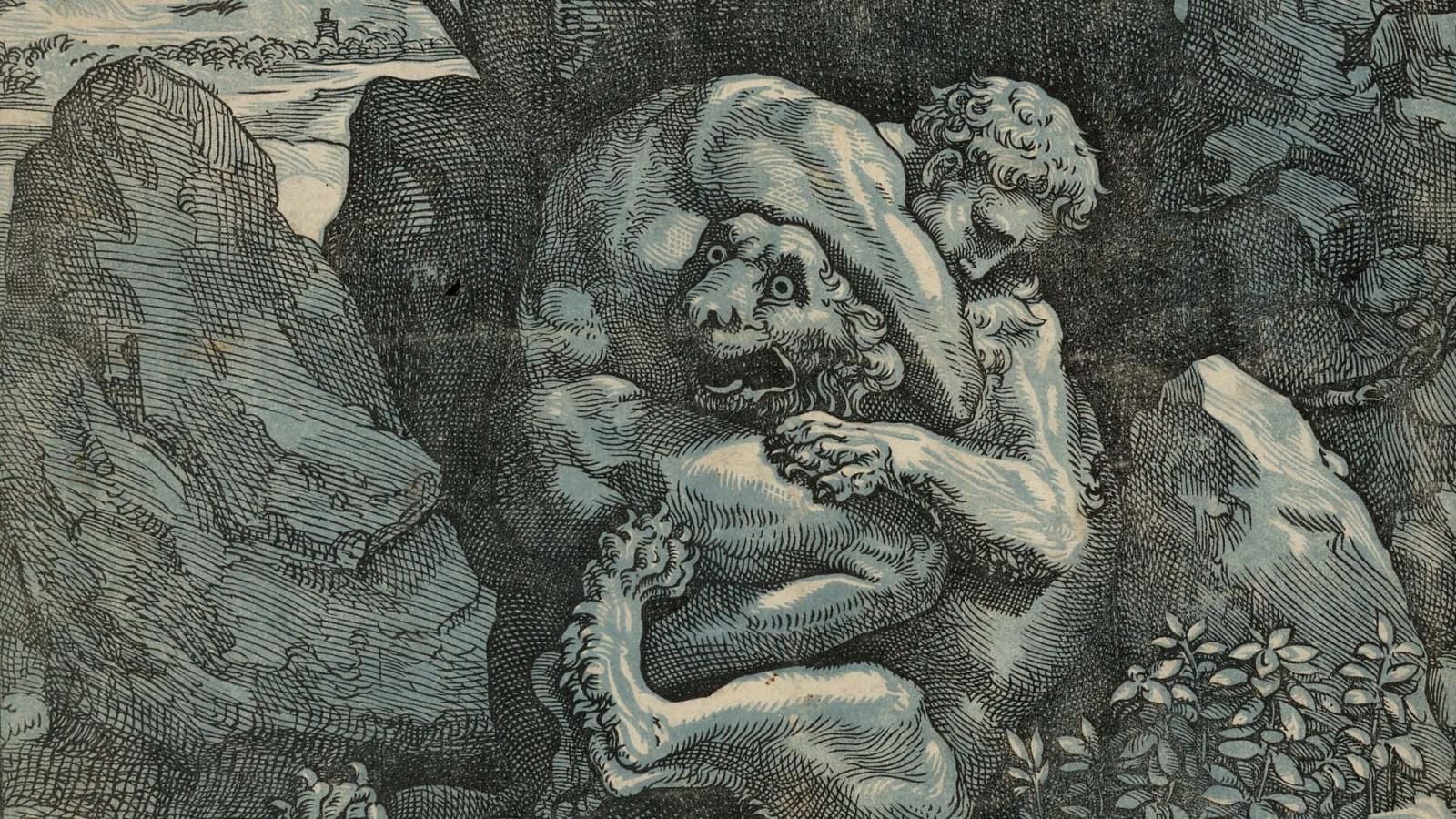
The printing revolution of the later 15th century allowed images to be reproduced and disseminated far and wide. At first, the most common type of print was the woodcut: a print taken from a block of carved wood. The woodcut was ideally suited to book illustrations, and many early practitioners were linked to the book trade; but entrepreneurial figures soon found new possibilities for the technology. From big to small, sacred to profane, woodcuts produced in the later 15th and early 16th century are marked chiefly by their variety, of format as well as function.
This display celebrates this variety, tracing the emergence of the woodcut in Italy, its proliferation and adoption for different ends. Some were utilitarian, with prints serving as everything from devotional aids to playing cards. The period also witnessed a growing market for prints made as works of art. This demand was often satisfied by some of the leading artists of the age, including Raphael, Titian and Parmigianino, who used prints to spread their fame across Italy and beyond – often by designing technically dazzling woodcuts that attracted attention for their technological prowess. These prints allowed artists in different cities to stay abreast of the achievements of contemporaries working elsewhere, including contemporaries they never met, making the print a driving force behind the changes Italian art underwent during the High Renaissance.
Admonitions of the instructress to the court ladies
Admonitions of the instructress to the court ladies
13 July – 24 August 2026
Room 91a

This masterpiece is considered a milestone in Chinese painting history. Traditionally attributed to Gu Kaizhi (about AD 345–406), it probably dates to between AD 400 and 700. To ensure its preservation it is only displayed for six weeks each year.
The Admonitions Scroll depicts a poetic text composed by an official Zhang Hua (about AD 232–300) aimed at correcting the behaviour of an empress. The British Museum purchased the Scroll from Captain Clarence Johnson (1870–1937) who was in Beijing in 1900 during the Boxer Rebellion (1899–1901). Originally a handscroll, the painting and later inscriptions were separated and mounted onto panels in 1914.
Find out more about the Admonitions of the instructress to the court ladies.
National Touring Exhibitions
The British Museum across the UK:
National Touring and Partnership Exhibitions
The British Museum works with partner museums and galleries in every part of the UK. The Museum is committed to sharing the collection and our knowledge as widely as possible to create a positive educational, social and economic impact across the UK. Through our programme of touring exhibitions and loans, between April 2024 and March 2025, the British Museum lent 2,000 objects to 140 venues around the UK, reaching eight million visitors outside London.
Gladiators of Britain
A British Museum Partnership Exhibition
Gladiators of Britain
Grosvenor Museum, Chester: 20 September 2025 – 25 January 2026
Tullie Museum & Art Gallery, Carlisle: 7 February – 31 May 2026

The events of the amphitheatre, with its wild beasts and enslaved fighters, are one of the most fascinating aspects of Roman culture. Bringing together some of Britain's most important objects from the period, this touring exhibition – now on its final two venues after successful runs in Dorset and Northampton – will tell the story of those who died to the roar of the crowd.
A partnership with Colchester and Ipswich Museums, the exhibition will explore Roman spectacle in the local region of each venue. Highlights include the Colchester Vase loaned by Colchester Museums, which records a fight between two real gladiators, and the Hawkedon Helmet, the only confirmed piece of gladiatorial armour found in Roman Britain.
Supported by the Dorset Foundation in memory of Harry M Weinrebe.
Find out more about Gladiators of Britain.
Ancient Sudan: enduring heritage
A British Museum Spotlight Loan
Ancient Sudan: enduring heritage
The Stirling Smith Art Gallery and Museum: 23 October 2025 – 22 February 2026

Explore the Kushite Kingdom, one of the largest empires in the ancient world, which flourished in Sudan nearly 3,000 years ago. This touring exhibition – on the second of its two venues after a popular run at Portsmouth Museum and Art Gallery – will examine this ancient culture's skilled craftsmanship, distinct religious beliefs, and the important role of women, as well as exploring the rich culture of modern Sudan. Highlights include beautiful examples of ceramics, a carved stone offering table and a striking bronze depiction of a Kushite goddess.
This cultural legacy now faces significant threats due to an ongoing civil war, which has displaced millions of people. While highlighting the efforts of Sudanese people to protect their heritage, the exhibition will introduce audiences to a deep, rich culture that is not defined by its present-day conflict.
Supported by the Dorset Foundation in memory of Harry M Weinrebe.
Find out more about Ancient Sudan: enduring heritage.
The Gallery of Medieval Life
A British Museum Partnership Gallery
The Gallery of Medieval Life
Opened 7 August 2025
Norwich Castle Keep

Following a multi-million-pound redevelopment, Norwich Castle Keep has reopened its doors to visitors. One of the most spectacular palaces in medieval Europe, the Grade I-listed Keep was originally commissioned by William the Conqueror and completed by his son King Henry I in 1121. The splendour of its medieval past has now been recreated, and for the first time in the Keep's 900-year history, visitors can access all five floors, from basement to battlements.
A new atmospheric medieval gallery, developed in partnership with the British Museum, showcases exceptional artefacts from across the medieval period. The permanent Gallery of Medieval Life explores three key aspects of medieval society – workers, the nobility and the Church. Over 900 treasures, with more than 50 on long-term loan from the British Museum, bring visitors closer to the experiences of those who lived in this fascinating period.
It's the British Museum's first medieval gallery outside of London, and its seventh Partnership Gallery to open around the UK.
Find out more about The Gallery of Medieval Life.
Conclusion
We look forward to seeing you at the Museum soon!
Make a day of it with a trip to the Great Court Restaurant, under the spectacular Great Court roof, and bring the family to one of our free family events. Plus, get your 8–15-year-olds signed up to the free Young Friends scheme and receive:
- Bi-weekly emails packed full of fun activities such as trails, quizzes and craft activities.
- Details of family events across the Museum.
- Pre-booking for our famous Museum sleepovers.


