

A timeline of Japanese artist Katsushika Hokusai
Revisit our past exhibition:
Revisit our past exhibition:
Discover the key moments in the life of Katsushika Hokusai (1760–1849), one of Japan’s best-loved and most inventive artists.
Follow his remarkable journey from lowly apprentice to rising star painting before the shogun. Then to the difficult years of the 1820s, when he lost his daughter and second wife. And finally to the 1840s, when he achieved a profound understanding of the world through his art.
A brush that never stopped
Predominantly known outside Japan for his woodblock print Under the Wave off Kanagawa (popularly called The Great Wave), Hokusai actually produced thousands of paintings and prints, as well as illustrations for nearly 270 books. He began drawing at the age of six, and for the next 80-plus years, his brush never stopped moving.
Even towards the end of his life, when sharing a home with his artist daughter Ōi (around 1800–1857), he stationed himself at his drawing table round the clock to keep pace with the demand for his work and the ideas he generated. He used many artist names throughout his career, often representing a life stage or personal belief. The primary names include: Shunrō, Hokusai, Iitsu, Manji and Gakyō Rōjin.
Hokusai is often categorised as an artist of the Floating World (ukiyo), a reference to the Edo period's (1615–1868) distinctive world of the theatre, pleasure quarters and popular culture. But he was much more. He was a sympathetic observer of contemporary society, a synthesiser of East Asian and European painting techniques, and a teacher who shared his joy as an artist in dozens of manuals on drawing and painting.
Travel restrictions during the Edo period, meant that Hokusai never left Japan. He lived most of his life in Edo (present-day Tokyo), but that did not prevent him from imagining larger worlds. Today, Hokusai is a world-famous artist who continues to motivate, challenge, and inspire.
Timeline
1760s–80s
Early years
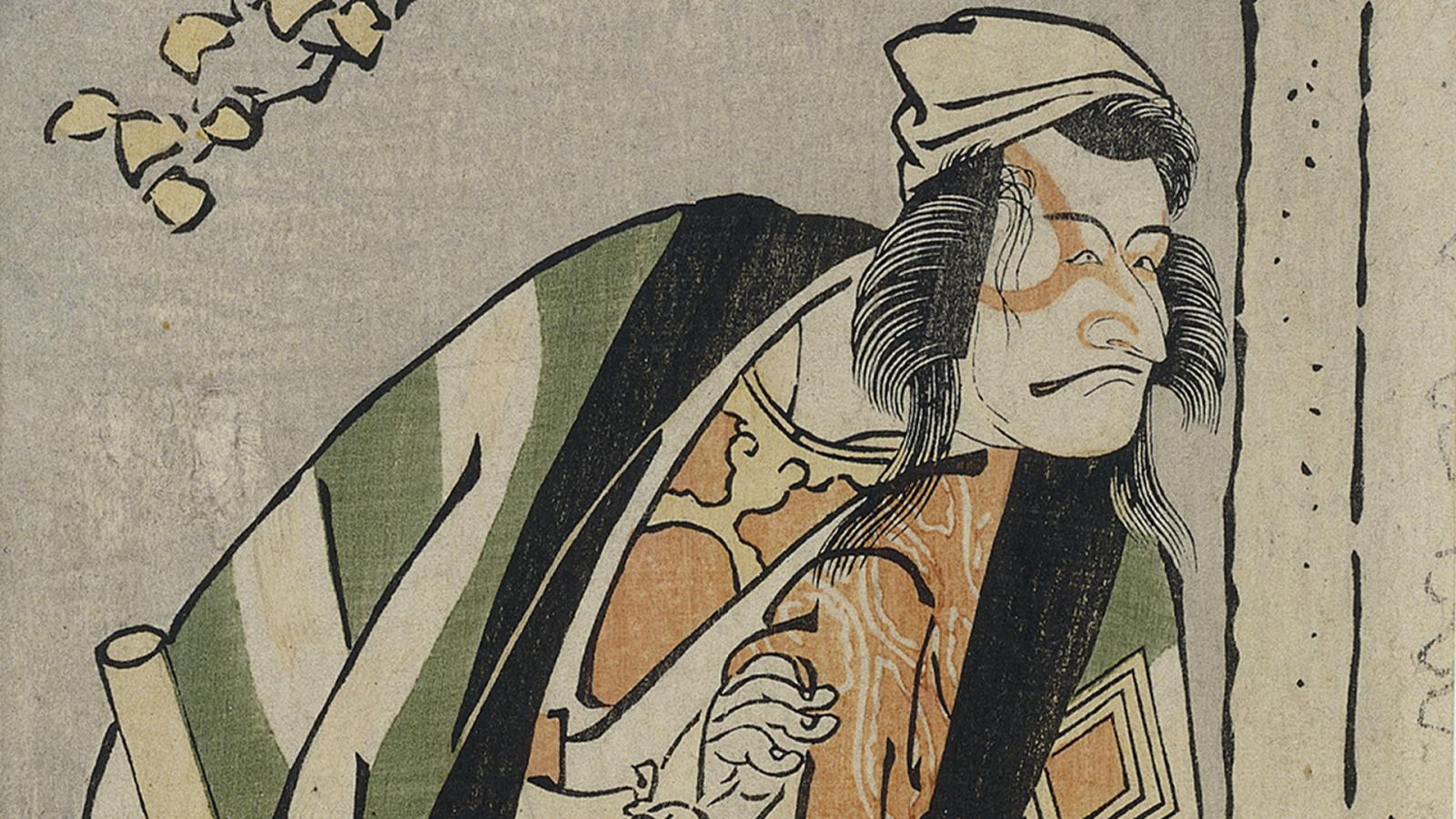
At the age of three, for unknown reasons, Hokusai was adopted into the household of a hereditary mirror polisher and in his early teens became an apprentice to a block-cutter, one of the key artisans in the woodblock printing process that dominated publishing at this time. In 1777, at the age of 19, he entered the studio of Katsukawa Shunshō, a successful Floating World artist who specialised in pictures of beautiful women and actors on stage. The next year, Hokusai began designing his own actor prints, signed Shunrō. He remained in Shunshō's studio until shortly after his master's death in 1793, at which time, again for unknown reasons, he was expelled. Throughout this period, he also wrote and illustrated popular short fiction.
1790s
Independent artist

1800–1810
Always in demand

1810–1812
Sharing knowledge

1820s
Difficult years

1830s
A second (or third) wave

The achievements of this period include 'Thirty-six Views of Mt. Fuji' (1831–1833), two series conventionally called 'Large Flowers' and 'Small Flowers' (early 1830s), and many other innovative series. In Japan, Fuji is considered a sacred mountain associated with longevity. It may also have held personal significance for Hokusai, since he incorporated the mountain’s distinctive outline into one of his later seals and devoted a three-volume illustrated book to 100 views of Fuji. The art names 'Manji' ('Everything') and Gakyō Rōjin ('Old Man Crazy to Paint') both emerged around 1834. See the 'Thirty-six Views of Mt. Fuji' on Collection online.
1840s
Reaching higher

1840s continued
Artist of the sublime


