

Conservation
Contact us
Email: [email protected]
Instagram: @conservationinfocus
YouTube: Conservation and Collection Care
Department of Collection Care – Conservation
The British Museum
Great Russell Street
London WC1B 3DG
Our conservation specialists preserve the collection through a combination of preventive, interventive and analytical techniques.
Conservation contributes to our knowledge of the collections in aspects of manufacture, meaning and context. Working alongside curators, scientists and researchers, we've revealed many new discoveries.
By understanding a wide range of materials found in archaeological, historical and contemporary works, and the mechanisms by which objects deteriorate, we can address their stabilisation and long-term preservation.
We use a combination of old and new techniques. Some conservation practice is grounded in long-standing tradition and we also innovate and develop new conservation techniques and approaches.
We're unable to carry out treatment on non-British Museum collections. Please check the Conservation Register website, operated by the Institute of Conservation (Icon) for professionally qualified conservators.
Our work
As conservators we:
- Use our professional knowledge and expertise to help the Museum deliver:
- A full public programme including exhibitions, gallery developments and international touring shows
- Object loans
- The Portable Antiquities Scheme
- Preserve the collection for the future through preventive conservation measures.
- Develop conservation treatments and increase knowledge of the collection through an active conservation research programme.
- Contribute to the development of the profession through participation in national and international working groups and organisations and by setting conservation standards for others to follow.
- Contribute to the training and development of present and future conservators through work placements, masterclasses and exchanges.
- Work with many regional, national and international partners to provide consultancy, advice and skills sharing.
- Collaborate with indigenous and local communities, artists and makers – this informs conservation treatments and leads to a valuable exchange of knowledge about the collections.
Conservation at the Museum is made up of many specialisms, which are outlined below.
Our work 2

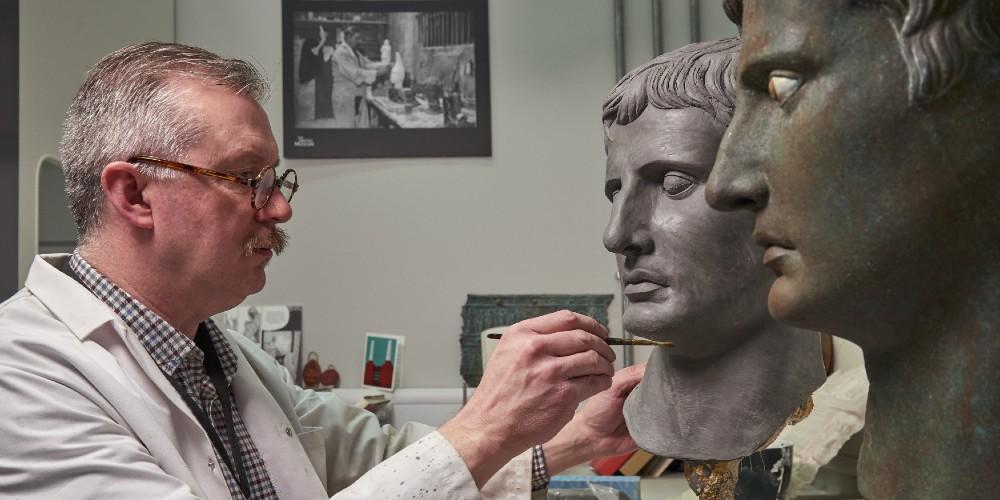

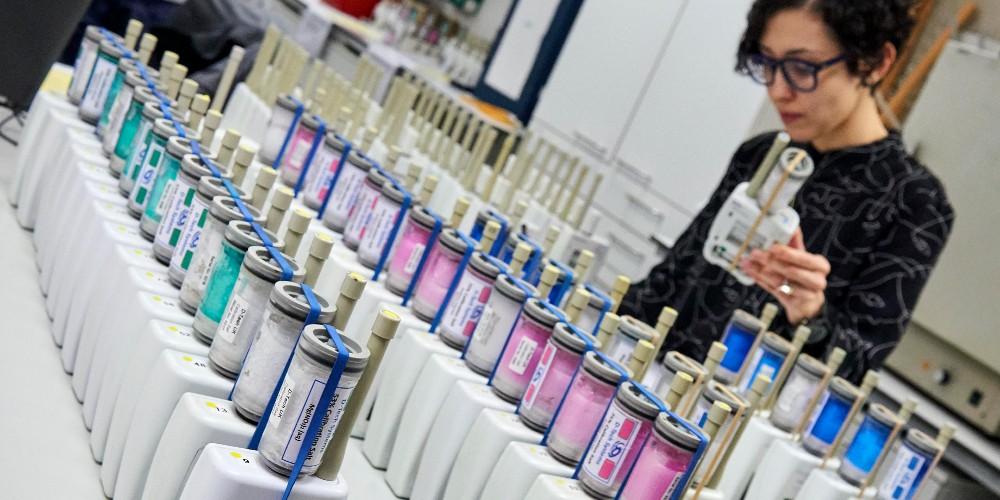
Research
Research at the Museum drives the care, display and understanding of the collection. Our research creates new knowledge, often through collaboration and by using cutting edge technology. Research projects, studentships and other activities cover a wide variety of academic disciplines and can involve archaeological excavation, studies of museum collections, working with craftspeople, understanding our visitors, conservation and scientific investigations.
The Conservation team within the Department of Collection Care has a unique and significant contribution to make to the Museum's research programme through its practice-based research projects. Our conservators combine knowledge and skills in art, craft, science, engineering, computer-based technologies and imaging techniques to take care of the Museum's diverse collection.
Our research focuses on:
- Conserving and preserving the collection by finding new materials and developing new techniques, systems and methodologies – these are used to reduce or mitigate risk to items on display, on loan or in storage.
- Understanding how objects deteriorate by examining the materials they're made from and the techniques used to make them.
- Applying our research to business-as-usual museum practice such as improving packing cases to protect objects during transportation for loans and touring exhibitions.
Research outcomes are disseminated through presentations at conferences, by publishing in peer-reviewed journals and in blogs and videos. We regularly highlight our work through lectures and behind-the-scenes visits to the Conservation studios for Museum Members – view current Members events.


Student placements
The Conservation team offer a limited number of unpaid placements to students enrolled on recognised conservation training courses. These placements provide an excellent opportunity for students to gain real-world experience in object treatment and Museum process, guided by the Museum's expert staff. Placement duration is usually between eight weeks and six months.
Placement work generally focuses on developing practical skills and experience, with tasks drawn from the team's day-to-day work schedule. This can include both preventive and interventive work for exhibitions, loans, and display. It can also involve work on objects in storage and assistance with research projects. Mandatory health and safety training, induction training and some administrative tasks will form part of the placement. Placements focused on specific research aims or object types are sometimes possible by special arrangement.
The Museum is unable to provide financial or administrative support of any kind for these student placements.
Student placements information
History of Conservation
18th century
Cleaning, repair and mounting of the collection and new acquisitions were carried out in workshops attached to individual antiquity departments by artisan restorers working under the instruction of curators.
Early 19th century
A mounting system for graphic art in standard cream-coloured mount-board was developed in the early 19th century, under William Holkham Carpenter, Keeper of Prints and Drawings. It's now in use across the world.
1840s–50s
John Doubleday was the Museum's first permanently employed restorer. He became known for reconstructing the Portland vase in 1845 after it was shattered by a vandal. In the 1850s, William May Scott introduced the 'sunk' mount with a bevelled window for mounting graphic art.
1910s
Japanese materials and scroll-mounting techniques were introduced for restoring Asian paintings by the Head Restorer of Prints and Drawings, Stanley Littlejohn, and the Japanese print-maker Urushibara Mokuchu.
1920s
A small research laboratory was set up at the Museum by scientist Alexander Scott to investigate and conserve objects damaged by damp, after they were stored in underground tunnels during World War I. In 1924, Scott was joined by Harold Plenderleith. Together they went on to lay the foundations of museum science and conservation – including preventive conservation – and were in the vanguard of international pioneers in conservation.
Scott, Plenderleith and a century in the British Museum lab1930s–50s
1960s–70s
1973
1975
1983–94
1996
2014 – now
Gallery
-
Annual environmental sensor recalibration.
-
Repairing a silver casket using the Japanese shimbari clamping method.
-
Inpainting plaster fills on a ceramic statue of a deity.
-
Assessing the condition of a mosque glass lamp.
-
Cleaning a stone sculpture.
-
Cleaning mosaics.
-
Making a facsimile.
-
Stitching a nylon net overlay to secure applique textiles on a portable Indian shrine.
-
Assembling a complex Tahitian costume made of shell, barkcloth and feather.
-
Gentle surface cleaning of an ancient Egyptian mummified crocodile.
-
Surface cleaning a large bound album.
-
Stamping a Prints and Drawings mount.
-
Infilling missing areas from the back of a painting with repair silk.


