

Room 4
Egyptian sculpture
Visiting the gallery
Opening times
Daily: 10.00–17.00 (Fridays: 20.30)
See full opening hours
Advance booking advised
Gallery audio guides
Listen on the Audio app, available on the App Store and Google Play.
Travel back through 3,000 years of Egyptian history and come face-to-face with the Statues of Ramesses II and Amenhotep III.
The objects in the Egyptian sculpture gallery represent three millennia of pharaonic history. The displays have evolved with the field of Egyptology itself.
Modern Egyptology began with a French scientific expedition accompanying Napoleon's invasion of Egypt in 1798. After the British defeated the French, they took some of their most important finds, including the Rosetta Stone and the sarcophagus of the last Egyptian pharaoh.
Later, the British Consul-General Henry Salt received permission from Egypt's governor, Muhammad Ali, to collect antiquities, many of which were acquired by the British Museum. He employed excavators such as Giovanni Belzoni to remove sculptures, including the colossal bust of Ramesses II. Later acquisitions came increasingly from well-documented archaeological excavations.
Take a virtual tour
Peruse the Egyptian sculpture gallery from home. Can you make out the hieroglyphs on King Ramesses II's back?

Gallery facts
The civilisation of ancient Egypt arose in the fourth millennium BC and only waned in the first four centuries AD, after Egypt was annexed into the Roman empire. This makes it one of the world's most enduring civilisations.
The monuments in the Egyptian sculpture gallery were created for eternity. Placed in temples and tombs, the statues and wall images were meant as vehicles for the spirits of deities, kings and privileged officials.
The Rosetta Stone is famous around the world for having served as the key to deciphering the ancient Egyptian language and hieroglyphic script.
The largest Egyptian sculpture in the British Museum represents one of Egypt's greatest kings: Ramesses II, 'ruler of rulers', who reigned through most of the 13th century BC.
The Egyptian sculpture gallery is also home to the sarcophagus of Nectanebo II, Egypt's last true pharaoh. His reign was cut short by a Persian invasion, and his ultimate fate remains unknown.
Highlights
-
Colossal granite image of King Ramesses II
-
Colossal granite head of King Amenhotep III
-
Limestone list of Egyptian rulers


Timeline of ancient Egypt
About 3100–2686 BC
Early Dynastic Period – 1st to 2nd Dynasties
Egypt becomes a unified kingdom with highly centralised administration, built on the invention of hieroglyphic writing.
About 2686–2181 BC
Old Kingdom – from the 3rd to 6th Dynasties
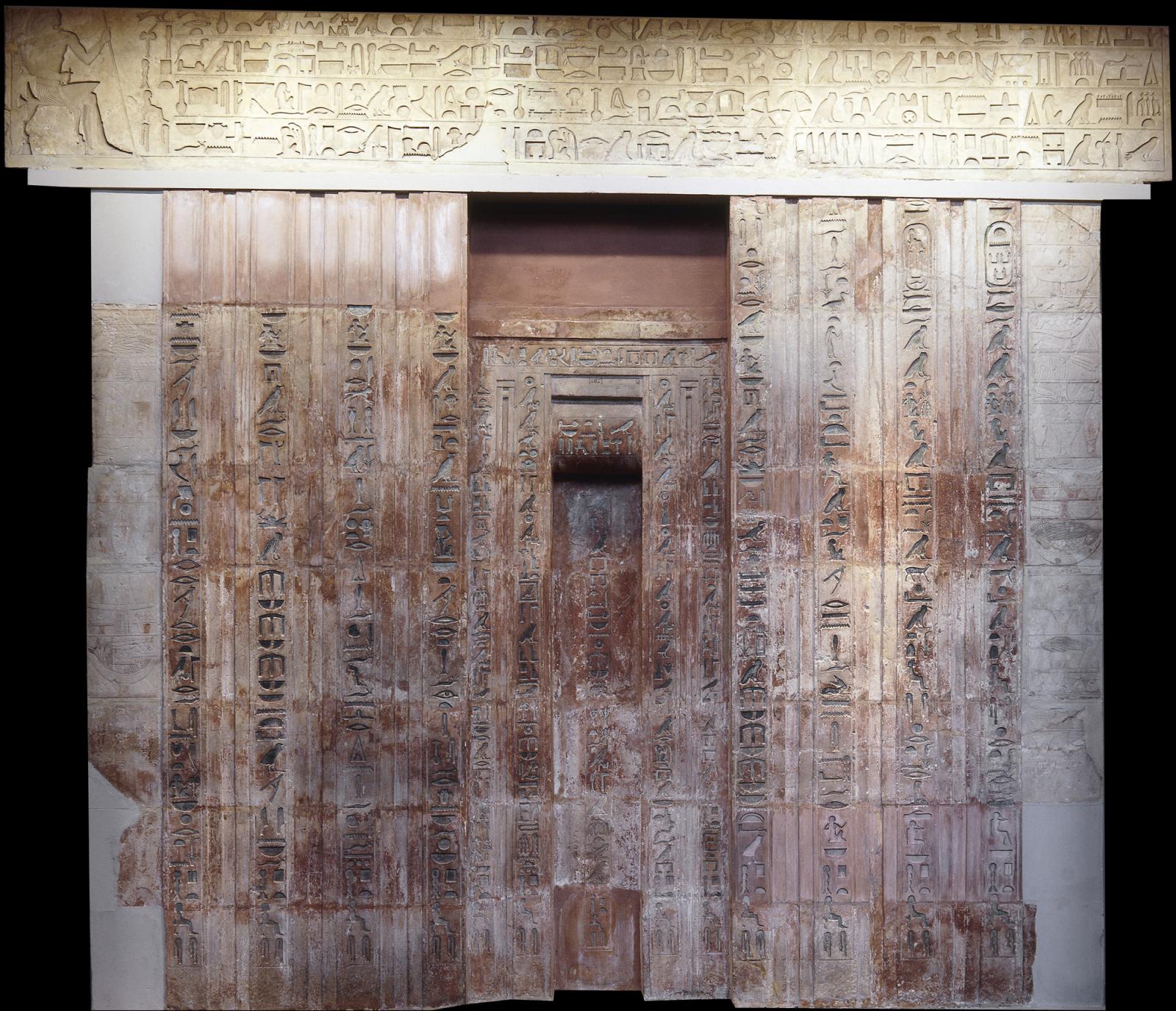
This is the first great period of Egyptian history, when its kings – the pharaohs – are buried in monumental pyramids.
View on Collection onlineAbout 2181–2025 BC
First Intermediate Period – from the 7th to early 11th Dynasties

The kingdom falls apart and power shifts from the court to provincial elites, with open conflicts erupting.
View on Collection onlineAbout 2025–1795 BC
Middle Kingdom – Late 11th to 12th Dynasties

Egypt is reunited under a long succession of powerful kings, who bring a golden age that will long be remembered by later generations.
View on Collection onlineAbout 1795–1550 BC
Second Intermediate Period – 13th to 17th Dynasties

Egypt's political integrity is undermined by a rapid succession of weak rulers, who lose much of their power to the leaders of Canaanite settlers – the Hyksos.
View on Collection onlineAbout 1550–1069 BC
New Kingdom – 18th to 20th Dynasties

This is Egypt's age of empire, with pharaonic rule at its peak extending to the shores of the Euphrates and deep into modern-day Sudan.
View on Collection onlineAbout 1069–664 BC
Third Intermediate Period – 21st to 25th Dynasties

Renewed political fragmentation allows Egypt to be invaded by its southern neighbour and former colony, the kingdom of Kush.
View on Collection online664–332 BC
Late Period – 26th to the final 31st Dynasties

Egypt's independence is restored but twice cut short by Persian rule – the second invasion causing the fall of the last true pharaoh.
View on Collection online332 – AD 396
Greco-Roman Period

Alexander the Great's conquers Egypt and the rest of the Persian empire, heralding centuries of Greek and then Roman rule, which ultimately sees Christianity replace the native religion.
View on Collection online

Accessibility
- Some objects in this collection feature on the British Sign Language multimedia guide. This resource is temporarily unavailable. You can access a selection of BSL films on your own device.
- Some objects in this collection feature on the audio description guide, available on Soundcloud.
- Seating is available.
- Step-free access available.
- View sensory map.
Visit Accessibility at the Museum for more information.


