
25 to 26 July 2026
IWM Duxford
Adults
See individual events
On 25 and 26 July, IWM Duxford will be proud to host a selection of very special guests from the USA. Thirty SR-71 pilots, Reconnaissance Systems Officers (RSOs), ground crew and civilians who have flown in and worked on the Blackbird. This is a once-in-a-lifetime opportunity to discover how the boundaries of aviation were pushed beyond what was thought possible, from those who did it.
Two days of lectures and a special evening reception will be held, giving you the chance to meet these men, speak to them and learn what they know about one of the greatest aircraft to ever take to the skies.
A pinnacle of Cold War technological innovation, the Lockheed SR-71 Blackbird, a twin-engine, two-seat, supersonic strategic reconnaissance aircraft, was the fastest manned operational jet-powered aircraft ever built, capable of reaching a record-breaking speed of over Mach 3.2. The only example outside of the USA is housed in IWM Duxford's American Air Museum.
Events
-

Saturday Talks - Sold out
Saturday 25 July
10:30am to 4:30pm
Sold outFeaturing eight talks with pilots and crew of the SR-71, as well as informal talks and meet and greets by the Blackbird housed in the American Air Museum.
-

VIP Reception
Saturday 25 July
6:30pm to 8:30pm
£150Taking place at Duxford's American Air Museum, home to the only SR-71 Blackbird outside the USA, meet the SR-71 crews and join them for a chat over a BBQ and drinks.
-

Sunday Talks - Sold Out
Sunday 26 July
10:30am to 4pmFeaturing two extended talks with pilots and crew of the SR-71, as well as informal talks and meet and greets by the Blackbird housed in the American Air Museum.


American Air Museum Pods
Across the weekend you can visit pods located near the SR-71 in the American Air Museum for short presentations given by the SR-71 crews throughout the day. These drop-in sessions are included with museum admission, you do not need to book an additional ticket.
| Date and Time | Time | Pod One | Pod Two |
|---|---|---|---|
| Saturday 25 July | 10:30am to midday | Gateway to Europe | Maintenance and Sensors |
| Saturday 25 July | 1pm to 3pm | Programme Selection and Training | Engines and Propulsion |
| Sunday 26 July | 10:30am to midday | Maintenance | Mildenhall Missions |
| Sunday 26 July | 1pm to 3pm | Engines and Propulsion | Crew Selection and Training |
The speakers
Discover the stories of our guest pilots, RSOs, ground crew and civilians:
-

Colonel Pat Bledsoe
Pat graduated from pilot training in 1961 and served as a UPT instructor before flying 450 combat missions in Vietnam as a Forward Air Controller. Selected for the SR‑71 program in 1971, he flew the Blackbird until 1978, commanding the squadron and setting the absolute (closed course) world speed record of 2,092 mph in 1976 with RSO John Fuller.
Later assignments included Air Attaché to Colombia, Deputy Commander for Operations of the 9th Wing at Beale AFB, and a civil aviation career with Alaska Airlines. He retired from military service in 1985 and was inducted into the Arkansas Aviation Hall of Fame in 2007. -

Lieutenant Colonel Blair Bozek
Blair began his career as an F‑4C/E Weapons Systems Officer and was selected for the SR‑71 program as an RSO in 1985. Crewed with pilot Dan House until the program ended in 1990, they flew 70 operational sorties together, including record‑length 11‑hour non‑stop missions from Kadena, Okinawa to the Persian Gulf.
In 1989, Blair survived an SR‑71 ejection following a turbine explosion and dual hydraulic failure. He later served on the SR‑71 reactivation team at Edwards AFB, flight‑testing a new data link that enabled near real‑time intelligence and contributing to survivability assessments against modern threats.
-

Master Sergeant Robby Butterfield
Robby joined the USAF in 1973. He served in the Blackbird program from 1982 to 1984 as a crew chief and from 1984 to 1989 as a Superintendent of Maintenance at RAF Mildenhall, UK. He retired honourably after 20 years of service.
Shortly after his retirement, an illness acquired from participation in the Gulf War paralysed Butterfield from the neck down. He learned to walk again, and his resolve carries him still. After retiring from the USAF, he received his B.S. in Mechanical Engineering and later worked for the Department of Defense on the Tomahawk cruise missile.
-

Master Sergeant Dave Burns
Dave served in the USAF from 1970 to 1990. He was an aircraft maintenance specialist on the T-33, F-4E/G, F-111D and OV-10, with tours in Germany and Japan.
While assigned to the SR-71 programme, he was the senior crew chief of the SR-71B trainer and received the SAC Master Crew Chief award. After retirement, Dave worked for Jet Aviation Inc. as an airframe and power plant mechanic with corporate aircraft.
-

Lieutenant Colonel Bill Burk
Bill graduated from Undergraduate Pilot Training in 1971 and served as a T‑38 instructor pilot before flying the KC‑135 as an Aircraft Commander. Selected to fly the U‑2 spyplane at Beale AFB, he transitioned to the SR‑71 in 1981, flying operational missions from England and Japan until 1985.
He then served as Director of the Airborne Nuclear Collections Division at Patrick AFB. After retiring from the Air Force, Bill flew for American Airlines as a First Officer and Captain.
-

Chief Master Sergeant Don Campbell
Don’s Air Force maintenance career spanned SAC B‑47s, the supersonic B‑58, and the SR‑71, culminating as test director for the Northrop B‑2. As the first crew chief assigned to the SR‑71 program at Beale AFB, he received the first operational aircraft in 1966.
Known as “Mr SR‑71,” he later served as the 9th Wing OMS Maintenance Superintendent, overseeing SR‑71, U‑2, KC‑135, and T‑38 operations. After retiring from the USAF, Don worked at Lockheed Skunk Works on the F‑117 and later joined Northrop as mission and test director for the B‑2 programme.
-

Colonel Buz Carpenter
Buz Carpenter completed his pilot training in 1968. He commanded the C-141 worldwide and flew the RF-4C Phantom II in Vietnam. Accepted into the SR-71 programme, he became an instructor pilot with over 230 flights and over 65 operational missions.
Buz served as the Pentagon Black World programmer for the F-117, B-2 and F-22. He later commanded an F-4E fighter squadron and was a Wing commander in Europe during Desert Storm. Buz is a member of the Virginia Aviation Hall of Fame.
-
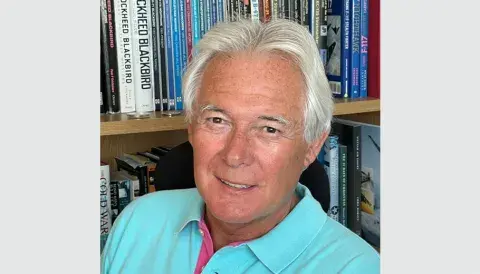
Mr Paul Crickmore
Paul is a renowned aviation photographer and author, recognised as a leading expert on the Lockheed Blackbird family and the F‑117 Stealth fighter. While working at the London Air Traffic Control Centre, he earned his pilot license, flew in RAF and USAF fast jets and had the rare opportunity to witness the SR‑71 set the New York to London world speed record in 1974.
His aviation writing career began in 1981 after receiving special clearance to fly aboard a KC‑135Q during an operational SR‑71 aerial refuelling. In recognition of his work, including writing the first substantive books about the Lockheed Blackbird family and F-117 Stealth Fighter, Paul was inducted as a Friend of the Smithsonian National Air and Space Museum and is an honorary member of the CIA A‑12 Road Runners, USAF Blackbird, and F‑117 Nighthawk Associations.
-

Lieutenant Colonel Bob Fowlkes
Bob graduated from Navigation School in 1978 and flew as a Weapons Systems Officer in all models of the F‑111, and conducted flight‑tests in the T-38, F-4D and F-106B.
From 1987 to 1990, he served as the last RSO in the 1st Strategic Reconnaissance Squadron, accumulating 240 hours in the SR‑71. He later delivered one of the final SR‑71s to the Air Force Museum at Wright‑Patterson AFB. He went on to become an Air Force aircraft maintenance officer and then a fighter mission planner.
-

Lieutenant Colonel Jerry Glasser
Following pilot training, Jerry flew the F‑4D and later the A‑37, participating in the ‘Dragonfly’ test programme and seeing combat service in Vietnam. He served as an instructor at Williams AFB before joining the Northrop F‑5E Military Assistance Programme. Selected for the SR‑71 program in 1980, Jerry logged over 900 flight hours. As an instructor pilot and simulator training director, he flew 110 operational sorties worldwide.
His missions included the first post‑strike sortie over Libya with his RSO, Ron Tabor, “interesting” SR-71 Space Shuttle integrated sensor support missions, and coordinated F-14 intercept sorties. After retiring in 1986, Jerry taught physics, mathematics, and robotics at the college and high‑school levels and remains an active educational speaker in the Sacramento region.
-

Mr Arnie Gunderson
"Mr J-58", Arnie, started his career with Pratt and Whitney in 1974. He was assigned to the J-58 engine group and, after five years, became a field rep. He spent the next 10 years supporting the SR-71 programme and was director of the J-58 overhaul line. In 1989, he was the Pratt and Whitney accident representative for the SR-71A (974) crash in the Philippines. He currently supports the Blackbird legacy at the Evergreen Air Museum as a docent and guest speaker.
-

Master Sergeant Mike Hull
As an SR-71 Electronic Warfare (Sensor) Specialist, Mike worked on various Defensive and Electronic Intelligence (ELINT) Systems for 22 years. His duty assignments included multiple deployments to England, Diego Garcia, and an eight-year tour to Detachment 1, Kadena Air Base on Okinawa.
In 1990, he managed the de-classification of the SR-71 EW systems and transfer to Eglin AFB for storage. In 1994, Mike was recruited to support the reactivation of the SR-71 Defensive Systems and remained there until 2000.
-

Mr Steve Justice
Steve retired from his “dream employer,” Lockheed Martin's "Skunk Works', in 2017. His experience bridges from analysis-based requirements to flight tests. A Skunk Works historian, he's held key roles in engineering, management and advanced design. Steve was the recipient of the Kelly Johnson Inventor of the Year award in 1993 and 1999. He is currently senior vice-president at Virgin Galactic, where he leads the Delta Class spaceship production development, the civilian path to space.
-

Colonel Barry MacKean
A Command Navigator with over 4,000 flying hours, Barry served on active duty from 1966 to 1992, flying the B‑52, FB‑111, and SR‑71. His assignments included tours at Plattsburgh AFB, Brooks AFB, and Beale AFB, where he flew operational SR‑71 missions. He served as an instructor RSO, Squadron Operations Officer, and Detachment Commander at RAF Mildenhall during the 1986 Libyan post‑strike missions.
Barry also flew one of the longest SR‑71 operational sorties, a non‑stop, round‑trip mission from Beale AFB to Murmansk, Russia. Following retirement, he was the site manager supporting Air Force contracts for the SR‑71 reactivation at Edwards AFB.
-

Colonel John Manzi
John served 23 years in the United States Air Force as a Weapon/Reconnaissance Systems Officer, Squadron Commander, and staff officer at various locations throughout the United States, Europe, and Asia.
He accumulated more than 2,000 jet hours flying primarily in fighter and reconnaissance aircraft, including the F-111 Aardvark, RF-4C Phantom II, and the SR-71 Blackbird. Selected for Blackbird duty in 1985, John flew as a Reconnaissance Systems Officer (RSO), Instructor RSO, and Standardization Board RSO and accumulated 465 flying hours in the SR-71.
-

Lieutenant Colonel Ed McKim
Following Navigator and Bombardier training, Ed was assigned to fly the B-52D Stratofortress. He deployed to Vietnam and flew 100 Arc Light and Linebacker II sorties. He flew the F-111A before being selected for the SR-71 program in 1980.
After four years in the SR-71, which included being fired upon by the North Koreans in 1981, Ed left active duty and joined the Air Force Reserve, retiring in 1995. Ed was then employed by Lockheed Martin “Skunk Works” as the SR-71 deputy program manager. He led the effort to bring the SR-71 system data collection into the “real-time” digital world.
-

Lieutenant Colonel Terry Newgreen
Terry served with the SR-71 Program from 1982 to 1986 as an SR-71 RSO, Simulator Instructor, and 4029th Strategic Reconnaissance Training Squadron (SR-71) Operations Officer.
After leaving the SR-71 Program, he attended Air Command and Staff College and went on to US Central Command at MacDill AFB, where he served on General Schwarzkopf’s personal staff during Operation Desert Storm. His last military position was at the US Special Operations Command, managing several classified aircraft programs.
-
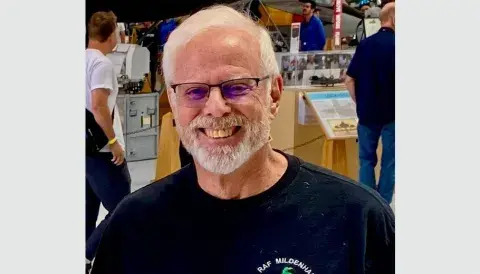
Major Bob Rieser
Bob was an All-source Intelligence Officer, Imagery Intelligence Officer, and Collection Manager. As Chief of the Collection Management Branch at Det4/9SRW between 1982 and 1986 he was responsible for building sensor actions into SR-71 flight paths, scheduling SR-71 missions, and coordinating theater and national collection requirements.
Retired from the Air Force in 1999, Bob became a Senior Intelligence Officer with the Defense Intelligence Agency (DIA) between 1999 and 2015. As the DIA Liaison Officer to the Deputy Director of Information Operations, Joint Chiefs of Staff, Bob was in the Pentagon on 9/11.
-

Lieutenant Colonel Maury Rosenberg
Completing pilot training at Laughlin AFB, Maury was assigned to the F-4 Phantom. Serving in Vietnam at Cam Ranh Bay, he flew 220 sorties, 69 of which were over North Vietnam. Assigned to the Wild Weasel Fighter program at Nellis AFB, he was selected for the Fighter Weapons school and became both an instructor and flew Operational Test and Evaluation.
Maury was selected for the SR-71 program in 1973 and upgraded to Instructor Pilot and Operations Officer for the squadron. He has over 1000 SR-71 flight hrs. He was the SR-71 aircraft Commander. He retired from active duty in 1987 and flew for United Airlines, upgrading to Captain for the 737, 757/767, and retired in 2003.
-
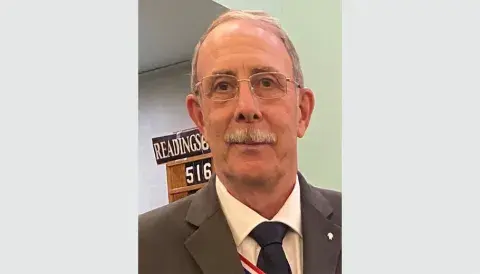
Master Sergeant Jack Schaab
Jack was assigned to the SR-71 program from 1975 to 1980. Starting as an assistant crew chief, he was selected as Maintenance Crew Member for the World Record flights in 1976. He returned to the SR-71 program in 1983 at Det1 ( Okinawa) as the Swing-Shift Supervisor/Level 2 inspector and Certifier for all Maintenance crew tasks.
-

Lieutenant Colonel BC Thomas
Flying the KC-135 and C-130 after pilot training, BC was selected for the USAF Test Pilot School and Edwards AFB, where he flew the U-2, T-38 and F-104.
He served 11 years as an SR-71 pilot, operations, Instructor /evaluator and flight test.
BC is the high time SR-71 pilot with 1,217.3 hours and is the only USAF person to have flown all three high-altitude reconnaissance platforms, the B-57F, U-2 and SR-71 above 60,000 feet. He was then a chief test pilot for United Airlines, qualified in every airframe. In 1992, he landed a Boeing 727 on Meigs Field, Chicago’s 3,600-foot runway, a remarkable achievement considering the size of the aircraft. The 727 was donated to the Griffin Museum.
-

Lieutenant Colonel Noel Widdifield
Serving in the USAF, Widdifield was an Instructor and standardisation navigator, radar navigator in B-52Hs at Kincheloe AFB, and flew combat in Vietnam in B-52s. In SR-71s, Widdifield flew as RSO from New York to London in a record-breaking time of 1 hour 55 minutes in 1974.
He served in both Air Staff and Joint Staff, retiring as a Lieutenant Colonel. After retirement from the USAF, Widdifield worked as Vice President for Space Applications Corp, Executive Vice President for Northrop Grumman, and started Bay Vue Consulting, Inc. He sold the business and retired in 2015.
-

Lieutenant Colonel Tom Veltri
As an SR-71 RSO, Tom's Blackbird suffered a catastrophic engine failure on a mission over the Baltic. Losing altitude, Soviet fighters launched an attempted intercept and possible shoot-down. Swedish Saab 37 Viggens escorted the crippled SR-71, along with Tom and his pilot, Duane Knoll, into allied airspace before landing in Germany.
Tom was assigned to the Joint Reconnaissance Center and various Liaison groups. Currently, he is still active in Government relations and Business development consulting.
-
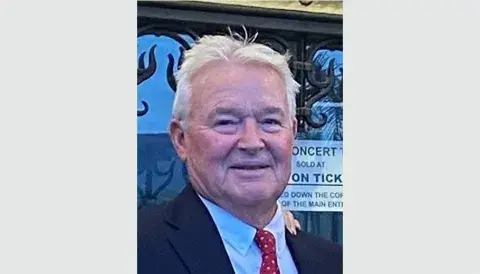
Lieutenant Colonel Don Watkins
Enlisted in the US Army in 1969, Don served as a paratrooper for the 173rd Airborne in Vietnam. A Florida State graduate, he was commissioned in the USAF in 1976, and flew both B-52H and FB -111 for Strategic Air Command. Selected for the SR-71 program in 1987, Don flew up to the Blackbird's retirement in 1990.
He commanded the last SR-71 mission out of RAF Mildenhall, and he and RSO Bob Fowlkes have a notable critical save of SR-71 962 after a double hydro failure at Okinawa. After assignments to Norfork, VA. Brooks AFB and a UN assignment to Bosnia, he was selected for the reactivation team at Edwards AFB in 1995 and flew until his retirement from the USAF. Don then went on to United Airlines for 15 years as a line/instructor pilot and commented, "Not a single IFE (in-flight emergency) with UAL”.


Speaker list correct at time of publishing.