


In the years after the First World War, tours of the battlefields became popular and a way to pay respects to those who had died.

© IWM (Q 60314)
The original Cenotaph, photographed in the Imperial War Museum on the annual day of remembrance.
The human cost of the First World War has become one of its defining legacies. It was a global conflict that changed the lives of millions of people.
Modern ways of remembering war began after the conflict, as people tried to cope with the huge loss of life it caused.
While scenes of rejoicing followed the Armistice in November 1918, the scale of the casualties and sacrifice endured by Britons during the First World War meant that more solemn commemorations were required to meet the national sense of loss and grief.
Traditions, such as the first two-minute silence took place on Armistice day 1919, at the request of King George V.
Surviving veterans and their dependents were also remembered, and in 1921, several organisations combined into the Royal British Legion to coordinate charitable efforts, with artificial poppies sold to raise funds.
Remembering the fallen
The remains of many who died in the war lay overseas. People at home found ways commemorate those who lost their lives during the First World War.
-
 IWM (Q 31513)
The Cenotaph
Sir Edward Lutyens designed a temporary 'cenotaph' for Peace Day, 1919, and the popularity of the simple, but striking monument was so great, that a permanent Cenotaph was commissioned to replace the wooden one in 1920.
-
 IWM (Q 31514)
The Unknown Warrior
A symbolic site was created with the interment of an anonymous dead serviceman in Westminster Abbey in 1920.
More than a million people filed past the flag-covered grave of the Unknown Warrior, the week before it was sealed.
Around the country communities recorded the names of their dead on war memorials.
-
 © IWM (EPH 2313)
Poppies
The poppy is the enduring symbol of remembrance of the First World War. It is strongly linked with Armistice Day but the poppy's origin as a popular symbol of remembrance lies in the landscapes of the First World War.
Read: Why we wear Poppies on Remembrance Day. -
 IWM (O 205)
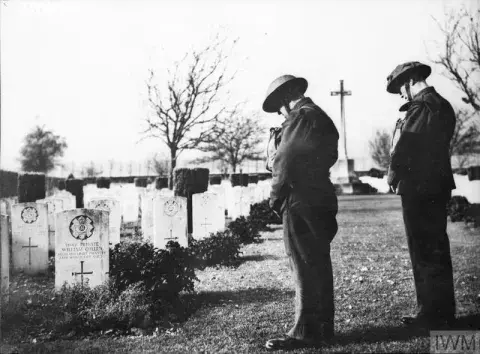
War graves
The Imperial (now Commonwealth) War Graves Commission undertook the task of establishing and maintaining permanent cemeteries across the world, becoming focal points for pilgrimages by presidents and ordinary people alike over the decades.
Elsewhere, the names of many missing were inscribed on monuments.
-

Next of Kin Memorial Plaques
Next of Kin Memorial Plaques were issued to the next of kin of the person who died serving with the British and Empire forces during the First World War.
The engraved bronze plaques, accompanying scrolls and King's messages were produced to commemorate those who gave up their lives and to acknowledge their sacrifice.

IWM (Q 47901)
How did people remember the fallen?
IWM curator Laura Clouting discusses the different ways people commemorated the dead– from the intensely personal, private rituals to the sombre national ceremonies.
She explains why the Kenyon Report, which outlined the need for a ‘common plan’ for the commemoration of the war dead in cemeteries far from Britain, was so revolutionary and looks at how local communities remembered their dead. The Loughborough Carillon Tower was just one of thousands of memorials unveiled during the 1920s.
Laura also explores the ways in which individuals, families and friends remembered those they had lost - from veterans holding reunion dinners to families keeping the belongings of the fallen safe for years.
One poignant example of this are the personal possessions of Private Albert Tattersall, who was just 23 when he died after being injured on the first day of the Battle of the Somme.
Laura also examines how remembrance is represented in popular culture and how forms of state remembrance have evolved, including how the concept for the Cenotaph changed from initial design to final construction in 1920.
View video transcript Hide video transcript


IWM (Art.IWM ART 2243)
Explore further
-
 ©IWM, IWM London, First World War Galleries
First World War Galleries
Explore over 1,300 objects from IWM's collections that tell the story of how the Great War was fought, won and remembered at the First World War Galleries at IWM London.
Discover objects on display that tell the story of the Armistice and how the First World is remembered, including original Cenotaph drawings and diary records of a 1928 pilgrimage by ex-servicemen and women to the Western Front battlefields and cemeteries.
-
 Art.IWM ART 1460 © Factum Foundation for Imperial War Museums
Blavatnik Art, Film and Photography Galleries
The work of artists, photographers and filmmakers on display at the Blavatnik Art, Film and Photography Galleries at IWM London provide a vivid insight into conflict.
Artworks in display include John Singer Sargent’s iconic six-metre-long painting Gassed, 1919, the largest painting in IWM's collection that depicts the experience and loss of fighting during the First World War fighting.
-
 © IWM (Q 48871)
War Memorials Register
War memorials are a vital part of the UK's cultural heritage.
IWM's War Memorials Register documents war memorials across the UK and records how memorials commemorate members of the armed forces, civilians and animals from all conflicts.
Explore IWM's database, find out more about our records and upload UK war memorials photographs.


