
Beauty and Destruction: Wartime London in Art is a free exhibition that tells the story of London during the Second World War, as seen by artists.
We stood on the hill above Basingstoke…and we watched this great glow in the sky. And we decided that was London burning. It couldn’t have been anything else. And the next day we were told that there had been this very bad air raid.
Interview with Margaret Lees, a British nurse, recalls witnessing an air raid over London in 1940.
See

As bombs rained down in 1940s London, artists responded. See art that presents a city both familiar and strange in over 45 paintings and drawings alongside photographs, film, objects and oral histories.
Londoners faced loss, displacement, overcrowding and shortages. Amid exhaustion and trauma, people showed an astonishing degree of adaptability. See the work that brings their world to life, from the iconic resilience of St Paul’s Cathedral to the devastation of the Docklands.
Do

Enjoy the work of artists such as Edward Ardizzone, Evelyn Dunbar, Bernard Hailstone and many others.
The exhibition is suitable for both adults and children. Families can enjoy a child-friendly ‘stamper’ trail and activity sheet that encourages children to spot details, ask questions and engage with the artworks.
We recommend allowing 60 minutes to enjoy this exhibition as part of your visit to IWM London.
Our visual story and sensory guide (PDF, 4.22MB) have more information on what to expect during your visit.
A large print guide is available at the exhibition. You can download the guide (PDF, 122.75KB) or view it on our large print guide webpage.
About the artworks

Set up in 1939, the British government’s War Artists’ Advisory Committee commissioned artists to document how the war transformed the city and its inhabitants. A large proportion of the works included in the exhibition come directly from this scheme.
Officially, the purpose of the committee was to compile a record of the war and promote Britain's image. A less widely known aim was also held by its founder Sir Kenneth Clark, then Director of the National Gallery. With the deaths of artists and writers in the First World War still fresh in his mind, he hoped to protect a new generation of British artists - being a war artist was a non-combat role.


For Families

Families can delve into the extraordinary stories of wartime London together in this free exhibition.
Discovering powerful personal accounts of courage and resilience, young visitors can also follow a fun and interesting ‘stamper’ trail and activity sheet that encourages them to spot details, ask questions and engage with paintings, drawings, photographs, film and objects.
Enjoyable and engaging for both children and adults, start your IWM London visit at Beauty and Destruction before exploring the rest of our permanent collection for a memorable day out for the whole family.
Practical information
Download a map of IWM London (PDF, 682 KB). Beauty and Destruction is located on Level 3 in the ‘Special Exhibition’ space.
-
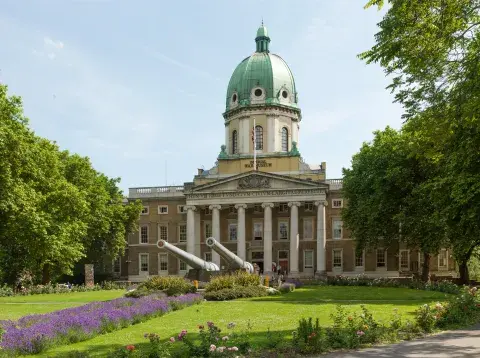
Getting here
- Address: IWM London, Lambeth Road, London, SE1 6HZ
- What3Words: ///fluid.bulb.rear
- Nearest London Underground and rail stations: Lambeth North, Elephant and Castle and Waterloo
- There is no general car parking at IWM London. There are a limited number of designated blue badge parking spaces which must be reserved at least three days in advance.
-
Eating and drinking
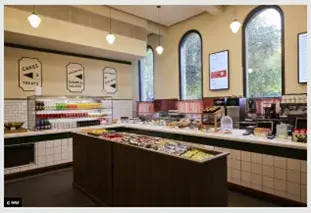
- Visit the newly refurbished IWM London café located off the main atrium, the ideal spot to relax during your visit.
- The new design is inspired by the community spirit of East London eateries, especially the iconic pie and mash shops that became local favourites in the 1900s.
- Serving sandwiches, pastries, salads, hot meals, and hot and cold drinks throughout the day.
-
IWM Shop
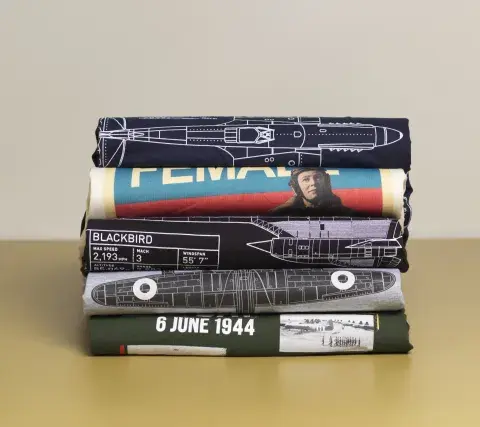
- IWM London has three shops that offer a wide range of inspiring and unique gifts, from books, clothing and accessories to vintage posters, homeware, toys and souvenirs.
- Every purchase made supports the work we do.
- Card and cash are accepted.


Header image: The Haberdashers' Hall, 8th May 1945, Eliot Hodgkin. Art.IWM ART LD5311.