
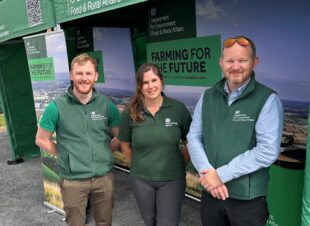
Today, the Prime Minister, Andy Burnham, and Farming Minister, Stephen Morgan, have announced a package of support to help farmers manage the impacts of this summer’s extreme dry weather. The announcement was made during their visit to a farm in Cornwall.
Heatwaves and below-average rainfall have increased pressure on water resources for agricultural production and Environmental Land Management (ELM) scheme activities. Dry conditions and heat have also increased the risk of wildfires across many parts of the country.
We know these conditions are creating real challenges for farmers.
On Wednesday, the Prime Minister chaired the government’s emergency response committee (COBR) on extreme heat, wildfires and drought.
Following COBR, measures announced today will help farmers manage drought pressures, protect crops and strengthen resilience for the future.
We’ve confirmed:
- Temporary adjustments to Environmental Land Management (ELM) agreements, so farmers affected by drought can continue to receive payments and take practical steps to protect livestock, crops and land.
- An extra £50 million for Sustainable Farming Incentive 2026 Window 2, taking the total budget for SFI26 to £290 million to help more farmers access support. Increased SFI uptake will help farmers to adapt to the risk of future droughts.
- Action to make it easier to build reservoirs, including reducing unnecessary barriers and updating planning guidance.
- Funding up to £15 million to build on-farm reservoirs, helping farmers store water and become more resilient to future droughts.
- Improved access to water during drought conditions, including that the Environment Agency will prioritise requests for short term variations to abstraction licence conditions.
Our investment today supports our Farming Roadmap vision of building a stronger, more resilient farming sector.
We're committed to working with farmers to improve the resilience of on-farm water supplies. This includes making sure the right planning and abstraction licensing arrangements are in place so farmers can invest with confidence.
We'll continue to monitor the situation closely and work with the farming and water sectors. If needed, we'll take further action to help farmers manage the impacts of drought.
In this post, we explain the support announced today, who is eligible, and how farmers can benefit.
ELM temporary adjustments
We're introducing temporary adjustments to our ELM schemes to give farm businesses flexibility where prolonged dry weather is affecting their ability to meet agreement requirements.
To help farmers manage the impacts, we're:
- removing restrictions so farmers and land managers can cut and graze land in an ELM agreement. This is to help ease shortages of grazing, fodder, forage crops and bedding.
- allowing farmers to create firebreaks on land in an agreement to protect houses, animals and crops from wildfires
- giving farmers more time to plant and establish ELM actions where dry conditions have made planting seed mixes impossible
Using temporary adjustments will not affect the payments you receive under your ELM agreement.
Read the full guidance on GOV.UK.
Eligibility
These temporary adjustments apply to ELM revenue agreements under the following schemes:
- Sustainable Farming Incentive (SFI)
- current Countryside Stewardship Higher Tier (CSHT)
- legacy CS – including Mid Tier (CSMT) and CSHT
- Higher Level Stewardship (HLS) under Environmental Stewardship (ES)
You can use a temporary adjustment if your land is in a county where the Environment Agency has declared ‘drought’ or ‘prolonged dry weather’ status.
As of 15 August 2026, all counties in England meet this criteria, meaning that all ELM agreement holders can use the temporary adjustments.
The temporary adjustments will remain available until the Environment Agency returns the county to normal status.
Keep up to date
You can check the latest drought status through Environment Agency drought reports.
The RPA keeps extreme weather guidance for farmers and land managers up to date on GOV.UK.
Earlier this week, we published a blog post rounding up information and resources to help farmers and growers manage farms and land during drought.
£50m increase to SFI Window 2
We're increasing funding for SFI26 Window 2 by £50m.
This takes the total SFI26 budget to £290m for new agreements. The additional funding will help more farmers access a reliable income stream at a time when many are facing lower yields and rising costs.
This will help more farmers sustainably manage soils, livestock, nutrients, fertiliser use and farm wildlife alongside food production.
SFI already funds drought-resilient, sustainable farming practices like increasing soil organic matter levels in arable soils through cover crops, and minimising soil disturbance through no-till.
Many of these actions improve soil health and increases the land’s ability to retain moisture, helping farmers manage the immediate weather while also increasing resilience for the future.
Window 2 will open in September to all farmers.
Earlier this month we published an update on SFI26, including details about how to apply. We will monitor demand for the scheme closely as applications open.
Water Management Grant
We're reopening the Water Management Grant, with up to £15m available to help farmers build on-farm reservoirs.
The grant is expected to open in the autumn.
This means that farmers will be able to store more water when it’s available and use it when it is needed most, improving resilience during dry periods and helping protect crop production.
On-farm water storage is an important part of preparing for more frequent periods of extreme weather. Having access to a reliable supply of water can help farmers manage short-term pressures while strengthening the long-term resilience of their businesses.
The scheme will focus on supporting water storage for crop irrigation, helping the horticulture and arable sectors adapt to climate change and improve resilience to drought.
If demand exceeds the funding available, we will keep the budget under review and consider providing additional funding.
Government has already announced plans to support the development of nine new reservoirs, to strengthen the country's water infrastructure and improve resilience to future droughts, floods and extreme weather.
Reducing planning barriers to building reservoirs
We're making it easier for farmers to build on-farm reservoirs.
Next week, we will publish our response to the National Planning Policy Framework consultation, making it clear that local authorities should support the development of agricultural infrastructure, including reservoirs.
This also means boosting support for greenhouses, polytunnels and farm shops – infrastructure that's essential for modern, productive farming.
In September, the Ministry of Housing, Communities and Local Government (MHCLG) will publish updated planning guidance for on-farm reservoirs to give farmers more clarity and confidence when investing in water resilience.
Defra and MHCLG will work with farmers and industry representatives, including the NFU and CLA, to review evidence on the effectiveness of current permitted development rights (PDRs) for on-farm reservoirs.
This is a first step in considering whether further planning reforms are needed to support the delivery of the infrastructure required for food production.
Environment Agency Regulatory Flexibilities
If you hold an abstraction licence and are concerned about your water supply, contact the Environment Agency as early as possible.
Farmers can already apply for temporary flexibilities from the Environment Agency to help access water during periods of extreme dry weather.
These flexibilities can include:
- extending abstraction seasons
- allowing earlier reservoir refilling when conditions allow
- trading water rights between licence holders
- joining licences together to give greater flexibility over where water can be used
- moving or adding abstraction points
- increasing licensed quantities where water is available and environmental conditions permit
All requests are assessed carefully to consider the impact on the environment or other water users.
We know that we need to get abstraction licensing right so that investment in a reservoir makes sense for farmers.
From September, the Environment Agency is simplifying its application process for long-duration abstraction licences for reservoirs. This will make it easier for farmers and other abstractors to apply for licences that better support long-term investment in water storage and resilience, and help farmers secure long-term finance.
Subscribe to the Farming Blog
Subscribe to the Farming Blog to stay up to date with news about funding. You'll receive a notification as soon as any new information is available.






29 comments
Comment by John George posted on
Thankyou for your reply. We are considering a bore hole water supply as at the moment we only have a well that is only 12 feet deep but has kept the farm supplied for 400 years ( the house age).This is supplimented by stream water access from some fields. But as we will be restricting stream access for the environmental reasons this will put a lot more demand on the well. There is no mains water any where near us so in drought conditions like this year we will have to access the stream unless an alternative can be provided. These are the reasons we hope there will be grant funding available for bore holes.
Comment by Sarah Stewart posted on
Hi John,
Thank you for taking the time get in touch. It's helpful to understand the challenges you're facing, particularly given your reliance on the existing well and the need to reduce livestock access to watercourses for environmental reasons.
I'll make sure your feedback on the potential value of boreholes in improving water resilience, especially where mains water is unavailable, is passed on to our policy teams as they develop future grant and funding opportunities.
Thank you again,
Sarah
Comment by lynda mitchell posted on
will there be any help with winter forage for livestock and most farmers are already using the winter supplies.
Comment by The Team posted on
Hi Lynda,
Thank you for getting in touch. If you're affected, it's worth exploring what support may be available, including schemes such as Forage Aid and RABI's drought grant:
https://support.addingtonfund.org.uk/
https://rabi.org.uk/drought-support/
Best wishes,
The Team
Comment by Simon jervis posted on
Hi
Livestock farmers definitely would appreciate help with tanks for storing roof rainwater for Livestock drinking.
Also help to create reservoirs for use to provide drinking water for Livestock
Thanks simon
Comment by The Team posted on
Thanks for getting in touch and sharing your views, Simon.
Best wishes,
The Team
Comment by Hollie storey posted on
Is this for real, no help with the forage shortage or the feeding of animals or the damage to crops and grass
Comment by The Team posted on
Hi Hollie,
Thanks for your comment. Through the temporary adjustments to ELM scheme agreements, we're allowing farmers to cut and graze land in an ELM agreement to help ease shortages of grazing, fodder, forage crops and bedding.
We will continue to work with the farming sector, taking further action if needed.
Thanks,
The Team
Comment by Matthew Hague posted on
With regards to total SFI funding of £290M. If we assume that £50M is used up by Window 1, leaving £240M for Window 2.
Assuming 50% of farm businesses in England that are over 50 ha and 20% of under 50 ha are looking to apply to Window 2, equates to 32k intended applications (total 40k farms > 50ha; 60k < 50ha). Assuming an average application total of £50k (£100k sealing), equates to 4,800 successful applications. Hence, out of 32k farmers looking to make an application, only 1.5 out of 10 (15%) are likely to be successful.
Given the inevitable mass brawl, how does RPA intend to ensure the application process for Window 2 will be fair for everyone.
Comment by Sarah Stewart posted on
Hi Matt,
To clarify, the additional £50 million is for Window 2, not Window 1. In addition, any unallocated budget from Window 1, which closed last night, will transfer to Window 2, further increasing the funding available.
We recognise the concern that demand for Window 2, and indeed for any funding offer, may be high. However, it is not possible at this stage to comment on assumptions about the number of applications we may receive, average application values or potential success rates. You might be interested to know, though, that the average agreement value for Window 1 was just under £10,000. This post contains some headline figures from Window 1: https://defrafarming.blog.gov.uk/2026/08/29/sfi26-update-window-1-now-closed/
Applications for SFI are processed in the order they are submitted. However, agreements will not necessarily be offered in strict submission order, as some applications may require additional checks or further information before they can be progressed.
We are conscious of the need to ensure that all applicants have a fair opportunity to access the funding available. Our intention is for the Window 2 application process to be transparent, proportionate and fair, while supporting the outcomes the scheme is designed to deliver.
Best wishes,
Sarah
Comment by Clare Leggott posted on
It would also be helpful if there were grants committed to rainwater harvesting
Comment by The Team posted on
Hi Clare,
Thanks for taking the time to feedback. I've shared this with the team. Before applications open in Autumn, we'll share the details of the specific items and how to apply. If you subscribe to the blog, you'll receive an e-mail notification as soon as this information is available: https://defrafarming.blog.gov.uk/subscribe/
Best wishes,
The Team
Comment by Abby Cook posted on
A shame to see more hasn't been made available for non-land owning farmers. Whilst the above is of some assistance, there is little to support livestock keepers and graziers in particular who are struggling with exactly the same challenges.
Comment by The Team posted on
Hi Abby,
Thank you for sharing your feedback. I have shared this with team to consider. We do recognise the current pressure on winter feed and we are monitoring it closely. We are also removing restrictions so farmers can graze and cut eligible land in environmental schemes without losing payments. We will continue to work with the farming and water sectors, taking further action if needed.
Best wishes,
The Team
Comment by Richard Pelly posted on
How do you actually apply for a grant to, say, help fund the installation of an additional reservoir to supply a farm?
Comment by The Team posted on
Hi Richard,
Thank you for your comment. We'll share more information about how to apply for the Water Management Grant to improve water storage on farms, including building on-farm reservoirs, in Autumn. If you subscribe to the blog, you'll receive an e-mail when more information is available: https://defrafarming.blog.gov.uk/subscribe/
Best wishes,
The Team
Comment by McGOWAN Eamonn posted on
Is there any scheme for farmers to be able to purchase hay/ silage etc for cattle feed, from Northern Ireland to south if England
Comment by The Team posted on
Hi Eamonn,
Thanks for getting in touch. There is support available in England and Wales you could explore, including schemes such as Forage Aid and RABI's drought grant:
https://support.addingtonfund.org.uk/
https://rabi.org.uk/drought-support/
Best wishes,
The Team
Comment by john posted on
We definitely should be building more reservoir's or water storage area
not just for farmer's but for the general public
Comment by Suzanne Faulkner posted on
Farmers where possible, should have their own water supply to be able to water their crops etc
Financial help should be speedily provided to build these many
“Small, on farm reservoirs “
And
Without too much paperwork!!
We are lucky as
It rains here in UK
So let the farmers collect it
And then
They are able to produce
UK food
It might also help with the flooding problems.
When it rains !!
Comment by The Team posted on
Hi Suzanne,
Thank you for your feedback. Yes, through the Water Management Grant we want to support the development of reservoirs so farmers can collect water in the winter to use in periods of dry weather over the summer. This grant sits alongside action we are taking on planning rules for reservoir building and wider work to unblock the planning system. If you subscribe to the blog, you'll receive an e-mail when more information is available: https://defrafarming.blog.gov.uk/subscribe/
Best wishes,
The Team
Comment by John malamatenios posted on
Is a grant available for a water storage tank we are a cattle farm
Thank you .
John Malamatenios.
Comment by The Team posted on
Hi John,
Thank you for your question. Before applications open in Autumn, we will share exactly what items the grant covers and how to apply. If you subscribe to the blog, you'll receive an e-mail notification as soon as this information is available: https://defrafarming.blog.gov.uk/subscribe/
In the meantime, some water companies are offering support for tanks for livestock. It may be worth exploring options with your water company.
Best wishes,
The Team
Comment by John Hawkins posted on
Well done DEFRA.. This is much more pro active and good for all of us.. Thank you
Comment by Wendy Botwright posted on
Will grants be an available to open up a boar hole?
Comment by The Team posted on
Hi Wendy,
Thank you for your question. The focus of the Water Management Grant is on-farm water storage. Before applications open in Autumn, we'll share the details of the specific items and how to apply. If you subscribe to the blog, you'll receive an e-mail notification as soon as this information is available: https://defrafarming.blog.gov.uk/subscribe/
Best wishes,
The Team
Comment by John George posted on
What about help with putting in Bore holes for watering livestock and creating holding tanks again for livestock. Can't see anything here to help with this.
Comment by The Team posted on
Hi John,
Thank you for your comment. I've shared this with the team to consider. Before applications open in Autumn, we will share exactly what items the grant covers and how to apply. If you subscribe to the blog, you'll receive an e-mail notification as soon as this information is available: https://defrafarming.blog.gov.uk/subscribe/
In the meantime, some water companies are offering support for tanks for livestock. It may be worth exploring options with your water company.
Best wishes,
The Team
Comment by Craig posted on
A reservoir without a borehole supply (with a higher extraction permit) would be unviable on most farms.
Serious consideration needs to be given to funding boreholes.