AI by Design: Bauhaus Wisdom in the Age of Artificial Intelligence

Lead Applied AI Engineer
8 November 2024



In the winter of 1919, amid the ruins of post-war Germany, a group of artists made an audacious bet: that art, technology, and systematic thinking could rebuild not just buildings, but society itself. The Bauhaus wasn't just an art school—it redefined the dialogue between humans and machines.
Their most valuable legacy lies in their methods for approaching revolutionary change. They developed ways to make technology serve human needs and values. They showed how constraints could foster creativity, how technical expertise could blend with artistic vision, and how good design could make complex systems accessible to all.
Through their work uniting art with industry, craft with mass production, human creativity with mechanical precision, the Bauhaus created a blueprint for thinking about how people interact with technology; one that still remains relevant today. These foundational principles speak directly to our moment; just as the societal shifts, advancements in manufacturing, and evolving approaches to design transformed the Bauhaus era, Artificial Intelligence (AI) is set to profoundly reshape the world around us. By exploring the movement's key figures, we can extract valuable lessons for aligning AI development with public good.
Elevating the Ordinary through Collective Creativity
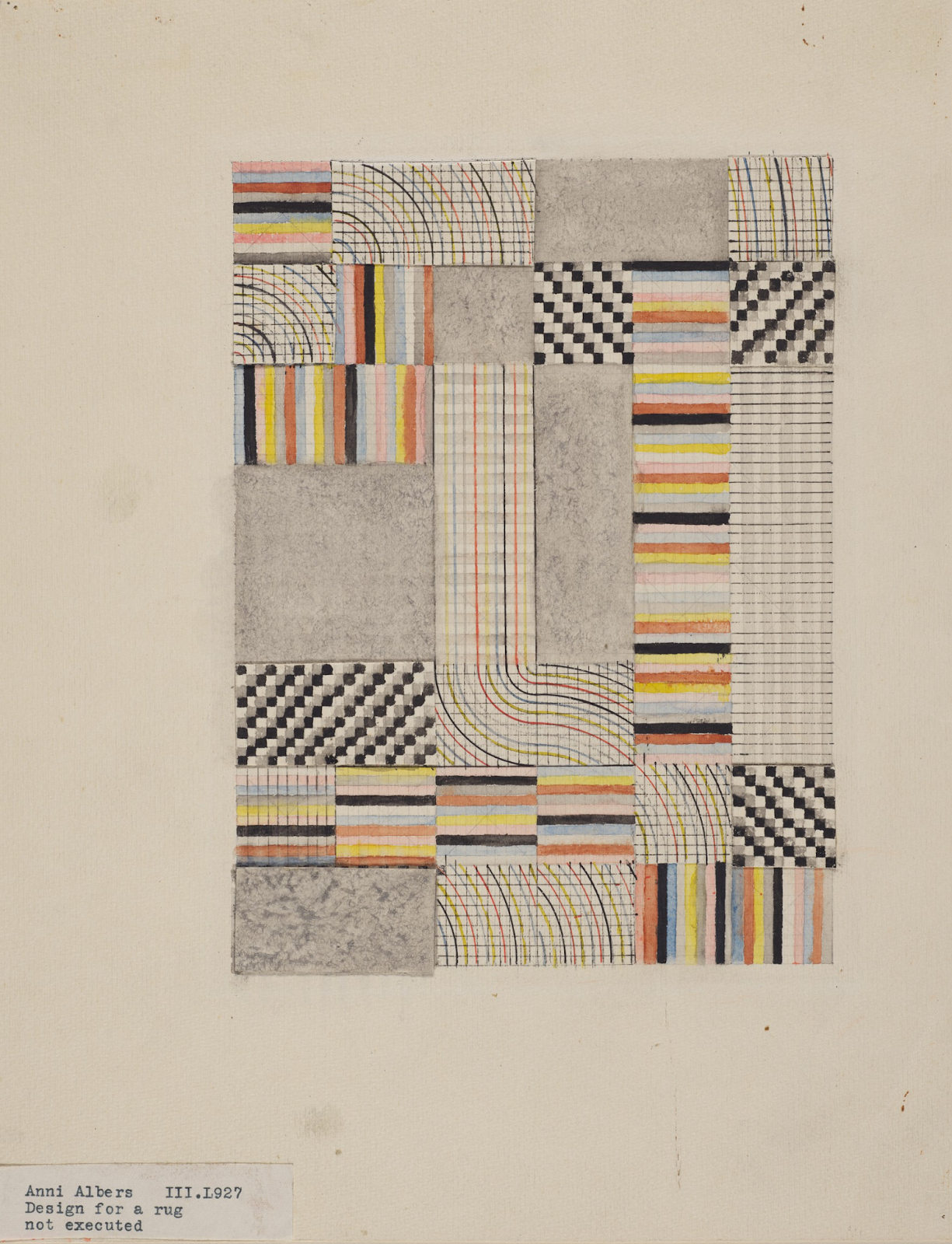
Facing the ruins of post-war Germany, Anni Albers and her colleagues embraced radical reinvention. László Moholy-Nagy famously declared "We must start from zero." Albers embodied this philosophy in her approach to weaving. She developed a methodology that transformed the ancient craft into a laboratory for modernist innovation. At her loom, she didn’t just weave threads, she wove together disciplines: colour theory, architecture principles, and ideas from material science. She brought these together to provide solutions to real-world problems.
ALBERS' METHOD
- Begin with raw materials
- Understand their true nature
- Cross boundaries with purpose
- Transform problems into solutions
"When you really understand a material, its inner structure as well as its outer face, a kind of integrity results." A textile might begin with a colour theory from Paul Klee, incorporate structural principles from architecture, and end up solving acoustic problems in buildings. This wasn't interdisciplinary work for its own sake—it was a recognition that innovation emerges when the conventions of disciplines dissolve.
Today’s AI teams follow Albers’ path. When designers, user researchers, AI engineers and policymakers collaborate, they create solutions no single discipline could achieve alone. A user researcher’s insights reshape an algorithm’s architecture; an ethical framework transforms a model’s design. Like Albers at her loom, they weave together different knowledge and perspectives to create something both powerful and humane.
The Powers of Modular Design
In 1923, Walter Gropius revealed a revolutionary idea disguised as standardisation. His Baukasten building system wasn’t just about making identical parts—it was about creating a new design language where complex systems could be broken down, understood and recombined endlessly. Each component had to work both independently and as part of a larger whole, making sophisticated design both accessible and adaptable at scale.

GROPIUS' SYSTEM
- Start with essential components
- Make each piece stand alone
- Ensure all parts combine freely
- Build systems that grow with use
"Design is neither an intellectual nor a material affair, but simply an integral part of the stuff of life itself." This wasn’t theoretical, it was about democratising good design through systematic thinking.
The best AI architectures embrace concepts of modularity and specialisation; they also generalise to a variety of tasks. The transformer model, the backbone of systems like ChatGPT, succeeds by breaking down a complex task (language understanding) into specialised components whose interactions can be systematically analysed and refined. The architecture’s success comes from having the right level of modularity, where components are distinct enough to analyse, but integrated enough to learn complex patterns. When AI teams design new architectures, they do it best when they’re following Gropius’s playbook: create clear, understandable components that work both independently and together.
Data as Material
Before any student at the Bauhaus could create, they had to understand. Johannes Itten would begin each class by having students handle raw materials in complete silence. Itten believed that true understanding came through all the senses. His preliminary course wasn't about technique; it was about developing tactile intuition for how materials behave.

ITTEN'S PROCESS
- First, observe in silence
- Then, explore a single material
- Test its every property
- Only then, begin creation
A piece of wood isn’t just “hard” or “soft”, students had to discover its grain, tension points, breaking patterns and stress responses. Only after weeks of exploration could they begin to work with it effectively. This wasn’t just preparation; it was a fundamental shift in how we approach materials.
For today's AI practitioners, data is our fundamental material, and Itten's approach is more relevant than ever. When data scientists and engineers take time for exploratory data analysis or creating data models and interfaces, before building models, they follow Itten's method: develop deep material understanding before attempting creation. Like Itten's students discovering how wood grain affects structural strength, AI teams should understand how data distributions shape model behaviour, how biases emerge from historical patterns, and how different types of data interact within complex systems.
The parallel extends beyond surface similarity. Just as Itten taught students to understand materials through exploration rather than predetermined rules, modern AI teams should develop intuition about their data through careful observation and experimentation. This might mean visualising data from multiple angles, testing its responses to different transformations, or understanding its social and historical context—all before writing a single line of model code.
Radical Accessibility
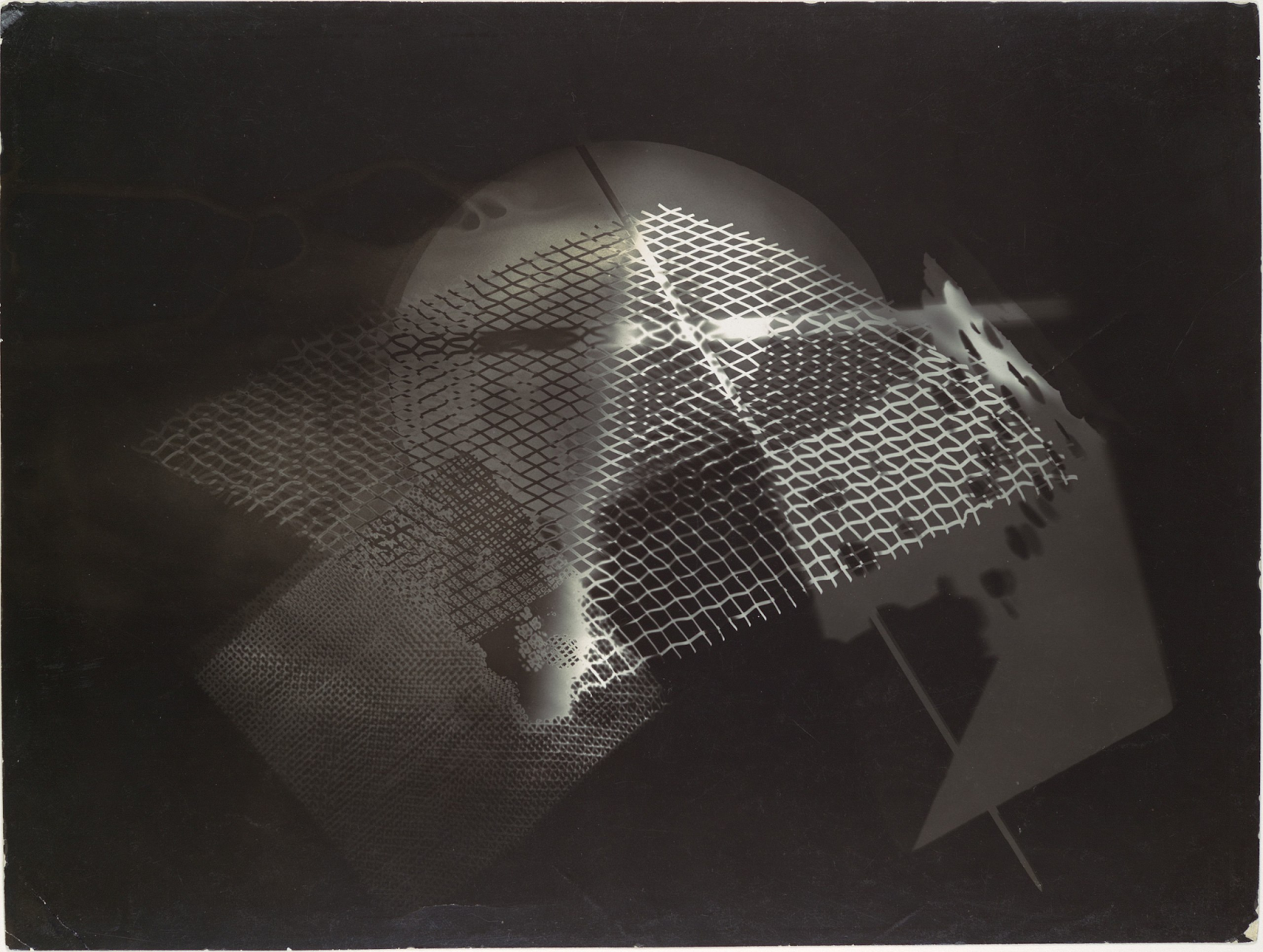
László Moholy-Nagy thought complex technology should be accessible to everyone. His photograms demonstrated this brilliantly. By simply arranging objects on light-sensitive paper, anyone could create sophisticated art. The most powerful demonstration of this came in 1935, when he ordered five paintings by telephone, using only graph coordinates to convey his design to a factory manager. This wasn't just an artistic stunt—it was a demonstration that complex creation could be made accessible through clear interfaces.
MOHOLY-NAGY'S APPROACH
- Find the heart of complexity
- Make it instantly clear
- Let people learn by doing
- Retain depth while removing mystery
When teams design AI interfaces for public services, they're pursuing his vision of democratic technology. Consider how ChatGPT's conversational interface achieves what Moholy-Nagy did with his photograms: making complex technology accessible without sacrificing its power. Like his telephone paintings, modern AI interfaces must translate sophisticated capabilities into clear, usable interactions that empower rather than intimidate users.
Choreography of Interaction
Imagine dancers moving like living geometry, human movements transformed into mathematical poetry. This was Oskar Schlemmar’s Triadic Ballet, but it was more than avant-garde theatre, it was a space for exploring how humans and machines could move in harmony.

SCHLEMMER'S BALANCE
- Begin with mechanical precision
- Add human expression
- Find rhythm between both
- Let limitations spark invention
Through his Bauhaus stage workshop, Schlemmer developed what he called art figures. These forms were neither purely human, nor purely mechanical; they were a deliberate fusion of both. Today's AI interaction designers face a similar proposition. When GitHub Copilot suggests code completions or an AI assistant engages in conversation, they're choreographing a dance between human and machine intelligence. Like Schlemmer's ballet, success depends on finding natural rhythms of interaction where neither partner dominates but both enhance each other. His vision of harmonious interaction between human and abstract form offers guidance for designing AI systems that complement rather than replace human capability.
Embracing Chaos
"A line is a dot that went for a walk," Paul Klee famously said, capturing in one phrase his unique approach to finding order in chaos. Instead of fighting chaos, he learned to harness it. His work at the Bauhaus wasn’t about imposing order, it was about discovering the patterns that naturally emerge from seeming randomness.

KLEE'S PRACTICE
- Start in uncertainty
- Search for underlying patterns
- Let natural order emerge
- Guide rather than control
In his famous rhythm exercises, students would draw regular patterns until their hands tired and lines became irregular. The goal wasn’t perfection, it was understanding how structure and variation could work together productively.
Modern AI systems face similar challenges in handling uncertainty and variation. When DeepMind designed AlphaFold to predict protein structures, they followed Klee's principle: don't fight chaos, learn from it. Like Klee finding patterns in wandering lines, today's most successful AI systems are designed to discover order in apparent randomness, turning unexpected variations into opportunities for learning. This approach has profound implications for AI development. Just as Klee's students learned to see structure in apparent randomness, AI systems must be designed to find meaningful patterns in noisy data without oversimplifying complex realities. The goal isn't to eliminate uncertainty but to work with it productively, creating systems that are both robust and adaptable.
From Bauhaus to AI in Government
The Bauhaus operated for just 14 years, but its ideas transformed how we think about society and technology. Their influence persists everywhere: in Apple's design philosophy, IKEA’s democratic approach to furniture and the visual language of modern interfaces. From typography to architecture, the Bauhaus brought functional design to all.
What matters for AI in government isn’t just their aesthetic legacy, it’s their practical methods for navigating technological change. When we’re trying to enhance public services, come up with novel and radical new approaches, or when we face challenges like algorithmic bias or data privacy, we can apply their core principles.
Core Principles
Build Deep Understanding
- Start with thorough observation
- Document systematic experiments
- Develop hands-on intuition
- Understand context fully
Unite Disciplines With Purpose
- Begin at the intersection of different fields
- Let real problems drive collaboration
- Combine expertise strategically
- Foster meaningful cross-pollination
Design for Democratic Access
- Create intuitive interfaces
- Remove unnecessary barriers
- Preserve sophisticated functionality
- Empower all users
Make Complexity Accessible
- Break systems into clear modules
- Design components that work independently
- Enable flexible recombination
- Build for future adaptation
Their success reminds us that technical decisions are inherently social decisions. The Bauhaus thrived not through institutional power, but through the strength of its ideas and its commitment to human-centred design. As we develop AI systems for public good, we need this same commitment to making powerful technology both accessible and democratic.
The Bauhaus showed us that revolutionary technology can serve everyone—not just technically or economically, but socially. Their methods offer practical tools for our transformative moment. The challenge now is to apply these lessons to ensure AI truly serves for public good.