One Year of i.AI: Reimagining Government through Artificial Intelligence

Director of i.AI
16 December 2024


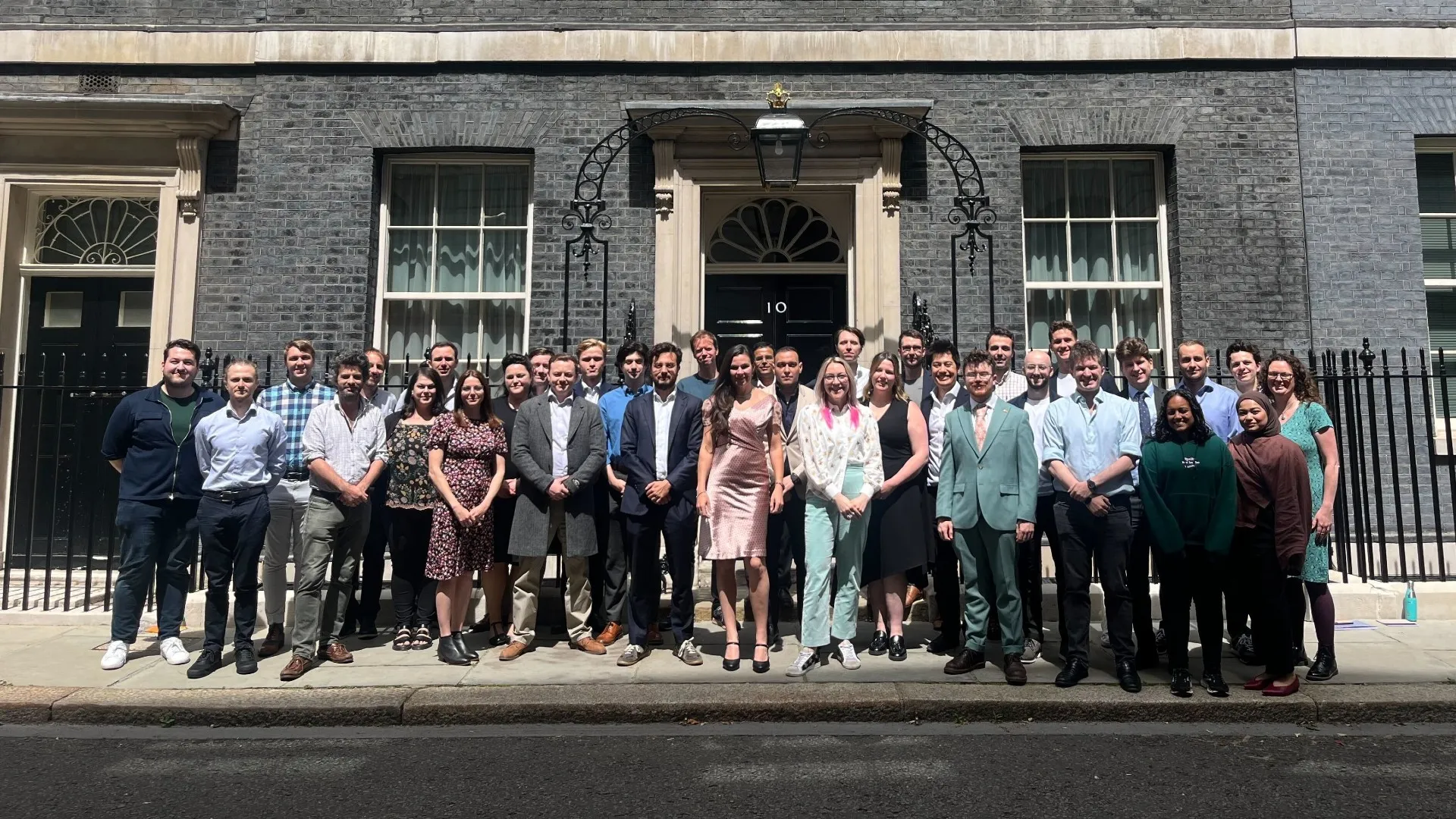
As we mark the first anniversary of the Incubator for Artificial Intelligence (i.AI), I have taken a moment to sit back and reflect on a transformative year that has challenged traditional notions of government technology and public service delivery. What began as an ambitious vision to radically improve public services through AI, and with it improve public trust, has evolved into an internationally recognised beacon of progress and innovation within the UK government. I am both proud and extremely grateful to be leading this team of enthusiastic, driven, collaborative, exemplary technologists and excited about the road ahead for the team as part of DSIT’s digital centre of government.
It hasn't been a journey without obstacles. There have been abundant blockers, frustrations and false starts. But in itself this has contributed to developing a core strength of the team - a genuine commitment to learning, iterating, and improving, and a refusal to be prevented from reaching their goals – if something fails, we try, try again and find another route to impact. Both in our technology, and our approach to delivery, we strive for constant refinement, effective learning from failures, and evolution. No setback is a roadblock, it is a data point for improving how we operate.
Whilst I’m soon to move to a new role (still in public sector AI), I remain as enamoured with and committed to the vision as I’ve ever been. Creating and guiding this team has so far been the pinnacle of my professional life and I cannot wait to watch them continue to grow and excel. Each and every member of the team regularly inspires me to do better, work harder, and figure out how to do better for the public.
The Founding Philosophy: More Than Just Technology
i.AI is driven by a simple philosophy: technology should be used to serve the public good. This isn't about chasing the latest trend or playing with cool tech, but about solving real-world problems that impact citizens' lives. Our goal is not to replace human decision-making but to enhance it, not to replace human interfaces by machine, but to make government more human, using AI, freeing up humans to speak with humans, alerting us more quickly to the needs of the most vulnerable, whilst replacing the mundane processes with much more effective, faster, better systems.
Key Philosophical Principles
- Public Service at the Core: Every project, every line of code is measured against one critical metric - does it genuinely improve public service?
- Transparency and Trust: In an era of increasing skepticism about technology, i.AI has committed to radical transparency. By releasing code, explaining methodologies, and engaging directly with the public, we are doing our bit to rebuild trust in government, something that can only be done by being open and provably trustworthy.
- Talent-Driven Innovation: Recognising that technology is fundamentally about people, i.AI has attracted top-tier talent from industry and academia, creating a technical, highly professional core that is the envy of industry and other governments. We build in house, sometimes working with collaborators who join us to co-build in our spaces, but firmly believe that this work can be delivered most effectively when driven internally, with and for the people that deliver critical services.
Breakthrough Projects: From Concept to Reality
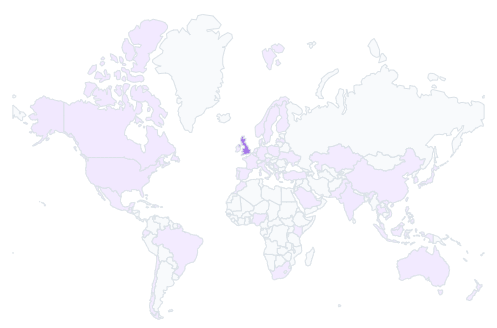
The past year has seen a hive of industry, incubating, testing and scaling up projects. Have a look at our infographic below for a snapshot of what we’ve been up to!
 Incubator for Artificial Intelligencehave:
& departments

Alpha or Beta
 1000+ users
 Trialled in Ministerial private offices
 400x cheaper and 1000x times faster than human analysts
 9000+ interactions per month in 5 Citizens Advice offices

 17Open source
Github repositories
Working with partners
across tech and research sectors
Out of 57 ideas we have tested, we currently have 22 in incubation and 11 are in our development pipeline, in alpha, beta or scaling stages. These are few of my favourite projects that demonstrate the potential of AI in public services:
- Redbox: Harnessing the power of large language models to improve civil servants' work. A tool allowing civil servants to "chat' with a range of cutting edge, large language models (LLMs) and their documents up to OFFICIAL-SENSITIVE. This streamlining of information and access transforms what once took hours of manual review and summarisation to be accomplished in minutes. We are making Redbox the easiest way for civil servants to access the world's leading and most advanced LLMs, initially scaling this i.AI pilot to all civil servants in the Cabinet Office and Department for Science, Innovation and Technology. We want to use this strong foundation to keep building general tools that support civil service specific workflows, and truly realise the vision of an AI-first Redbox for every civil servant.
- Caddy: Expert advice to support people interfacing with the public. Built in collaboration with Citizen’s Advice, Caddy is our AI powered co-pilot for customer service functions in the public sector. Caddy seamlessly integrates into existing systems and provides expert advice to advisors and call handlers. Utilising “double human in the loop” oversight, Caddy helps government to offer better advice to the public.
- NHS collaboration: More efficient healthcare. On 25th April we signed a charter with the NHS to help them with efficiency tools and infrastructure. We are also working with colleagues across the NHS to solve significant public health challenges. These applications of AI are high stakes and could potentially fail, but this is entirely within our process as an incubator and will be of high value if we succeed. Watch this space!
- Consult: Democratising Government Consultations. An AI-powered platform expected to save approximately £80 million annually by automating and improving the consultation process. We plan to support civil servants to more effectively analyse and act on the views of the public.
- rAPId: Free Data Sharing Infrastructure. Solving the problem of huge consultant spend on sometimes unwieldy and incompatible data sharing solutions, rAPId is an open-source end-to-end data sharing solution. rAPId is built to be scalable, allowing users to work with big data securely, and simple to deploy, and is freely available on GitHub.
Hear from our team!
We also asked members of the team to reflect on their time here at i.AI. This is what they said!
Why did you join i.AI?
Showing slide 1 of 7
 Ben RowellLead Applied AI Engineer
I was drawn to i.AI because I wanted to make a real difference in people's lives, and I found a team of brilliant minds who share that passion. It's exciting that I get to work with cutting-edge technology while innovating services that have the potential to positively impact people up and down the country; that combination is pretty special.
 Jude WebbHead of Delivery
To experiment and test with how we build digital products. AI products are not as predictable as more traditional products, so what do we do the same and what do we need to learn to do differently?
 Liam WilkinsonHead of Applied AI
To have impact outside of a quarterly earnings report!
 James LoweHead of AI Engineering
I wanted to build AI products that made a positive impact, and believed the best way to do this was inside government working in an empowered and highly skilled team.
 Charlotte RyallSenior UX (User Experience) Designer
To be part of an exciting, innovative team that I could bring a User Centred Design perspective to. To work with a team of incredible AI technical expertise, I hoped to bring how we can make products useful, usable and delightful for the people who are using what we create.
 Nina MenezesLead Back End Developer
It was an exciting opportunity to work in a technical team, working on projects for the public good.
 Victoria Bew - Deputy Director, Strategy & Business Engagement
To take what I know about social innovation and government strategy, and apply it to one of the biggest opportunity areas of modern life - Artificial Intelligence.
What is your favourite thing about working here?
Showing slide 1 of 7
James LoweHead of AI Engineering
We are able to prioritise outcomes over outputs. If a product isn't working, we can change it or drop it. We are driven more by impact than announcement, by delivery over talk.
Liam WilkinsonHead of Applied AI
The amazing people and the variety of the projects
Charlotte RyallSenior UX (User Experience) Designer
Working with amazing, innovative people who have so much knowledge in the AI space. It's refreshing that there's a willingness to experiment and innovate iteratively in the emerging AI world with so many unknowns to discover.
Nina MenezesLead Back End Developer
Getting to work on interesting projects, and getting to learn new things from great colleagues.
Victoria Bew - Deputy Director, Strategy & Business Engagement
It’s fantastic to be part of an innovation team in the heart of government. We have so much potential to improve public services - that’s what gets me out of bed in the morning!
Ben RowellLead Applied AI Engineer
The scope of what we work on still amazes me. One week our team might be figuring out how to speed up renewable energy connections to the grid, the next we're reimagining how legislation works. I love that we operate like a startup and that we bring different skills together in a way that you rarely see in government.
Jude WebbHead of Delivery
Everyone is up for learning things together. We are working out how to do things that haven't been done before and how to do that in a safe, explainable way.
What is your biggest achievement?
Showing slide 1 of 5
Nina MenezesLead Back End Developer
One of the biggest achievements from my time in i.AI was helping to run the initial recruitment round. It was hard work, but worthwhile when great people joined the team. Another highlight from my time in i.AI was coming third in the Evidence House generative AI hackathon, and getting to present in Downing Street.
Ben RowellLead Applied AI Engineer
Consult has been one of my favourite projects to work on. The project takes a fresh look at how government handles public consultations and the process of analysing their responses. We've built an AI solution that processes thousands of responses in minutes, rather than weeks, and which could significantly transform how government makes policy decisions.
Jude WebbHead of Delivery
Recruiting people. I'm so proud of the wonderful, friendly, talented group of people I’ve helped to bring into the team.
Liam WilkinsonHead of Applied AI
Building a team of amazing (and still expanding) AI Engineers!
James LoweHead of AI Engineering
Product managing our Consult product through a pivot that allowed us to develop brand new capabilities that has got policy teams across government excited.
What are you looking forward to working on in the months ahead?
Showing slide 1 of 7
Victoria Bew - Deputy Director, Strategy & Business Engagement
As we enter our second year, there are two big opportunities for us to cement our role in making public services better. The first is the opportunities to collaborate with experts across DSIT, ranging from technologists in GDS to AI policy teams and beyond - by pooling our collective intelligence we can go much further together! The second, is the challenge and opportunity of scaling our impact. I’m really proud of what some of our pilots have achieved - scaling these into real implemented solutions is the next challenge, and one I look forward to grasping!
Charlotte RyallSenior UX (User Experience) Designer
Experimenting to get evidence for the emerging AI unknowns, such as: How can we design to build trust in AI tools? or What are new design patterns which help users understand the AI's decisions (overcoming the black box effect)?
Nina MenezesLead Back End Developer
More of our projects getting past the prototype stage, being scaled out and having an impact.
Ben RowellLead Applied AI Engineer
We're at an exciting stage now, taking Consult from a promising incubator project to something that could help civil servants across government. It's challenging; we need to make sure it works for everyone, and that civil servants can use it confidently regardless of their tech background. But that's what makes it interesting! We're building something that could genuinely change how government works.
Jude WebbHead of Delivery
Seeing more people using our products, measuring the impact and being sharing that in the open.
Liam WilkinsonHead of Applied AI
Incubating a whole new crop of projects in the Digital Centre for Government.
James LoweHead of AI Engineering
Working out how we take our biggest products to the next level, and make them more widely available.
Looking Forward: The Next Chapter
As i.AI moves to the Department for Science, Innovation and Technology (DSIT), the horizon looks bright. The team is not just developing tools; we are helping to reshape how government conceptualises technology's role in public service, adding much needed skills and tooling to the wider public service. Our vision extends beyond individual projects. It's about creating an ecosystem of innovation, making code available without charge to save valuable taxpayer money, upskilling existing and attracting new types of civil servants, and demonstrating that government can be as agile and innovative as any tech startup.
To the sceptics, the technologists, the public servants, and the citizens reading this - i.AI extends an invitation. Follow our journey, engage with and challenge our work, and help shape a more intelligent, responsive government. The future of public service is not about technology replacing humans, but technology empowering humans to serve better, decide smarter, and solve more effectively.
I would like to take this opportunity to thank all of our collaborators inside and outside government, with a special thanks to the No10 Data Science team (10DS), Microsoft, Google, Anthropic, OpenAI, Cohere, Elastic, AWS, the Vector Institute and everyone else we have worked with for your support, encouragement and for joining so enthusiastically with our hackathons and development initiatives. We look forward to widening our network of collaborators and working with you to further accelerate technology for the public good.
Dr. Laura Gilbert is the director of 10DS, the data science and analytics team in Downing Street, director of the Incubator for Artificial Intelligence (i.AI, now in the Department of Science, Technology and Innovation). Her teams provide fast-paced modelling and analysis to support policy making and delivery, deliver expert data and AI solutions into public services, and run a radical transformation agenda promoting the better use of evidence, data and technology in government decision making. She also created and spearheads a broader program of innovation, digitisation and radical upskilling in central government called Evidence House. She holds a doctorate in Particle Physics and Computing, is a Visiting Professor at LSE, and holds fellowships of the Institute of Physics and the Institute of Analytics. She previously worked in defence intelligence, quantitative finance, and for nearly a decade was CTO of a medical technologies company, Rescon, bringing it from start-up to SMT to acquisition before exiting and joining government in 2020.