Planning Reimagined: The Hackathon Story

Policy and Strategy Officer
12 May 2025



Here at the Incubator for AI (i.AI), we're passionate about harnessing the power of artificial intelligence to improve public services and drive innovation across government. That's why we were thrilled to be a key partner in the recent "Hack the Planning System" hackathon, a collaborative effort with the Ministry of Housing, Communities and Local Government (MHCLG), Open Digital Planning, and the Government Digital Service (GDS).
The hackathon, held in Leeds on April 30th and May 1st, brought together a diverse group of talented individuals – from highly skilled engineers to seasoned planning policy experts – to tackle some of the most pressing challenges facing the UK's planning system. For many, this was their first experience of a hackathon, adding an extra layer of excitement and discovery to the event.
Why Planning? Why Now?
Planning reform is essential for economic growth, and technical innovation offers a powerful pathway to achieve it. The "Hack the Planning System" event aimed to unlock this potential by fostering collaboration and innovation in a concentrated 48-hour burst of creativity. Participants were presented with four key challenge areas within the planning system:
- Predictive data models for housing affordability and supply
- Enhancing automation and efficiency within planning processes
- Transforming public engagement: visualisation, language and outcomes
- AI-driven insights for housing and infrastructure planning
These challenge areas were carefully selected based on feedback from stakeholders and reflect the real-world issues that planners and policymakers grapple with every day.
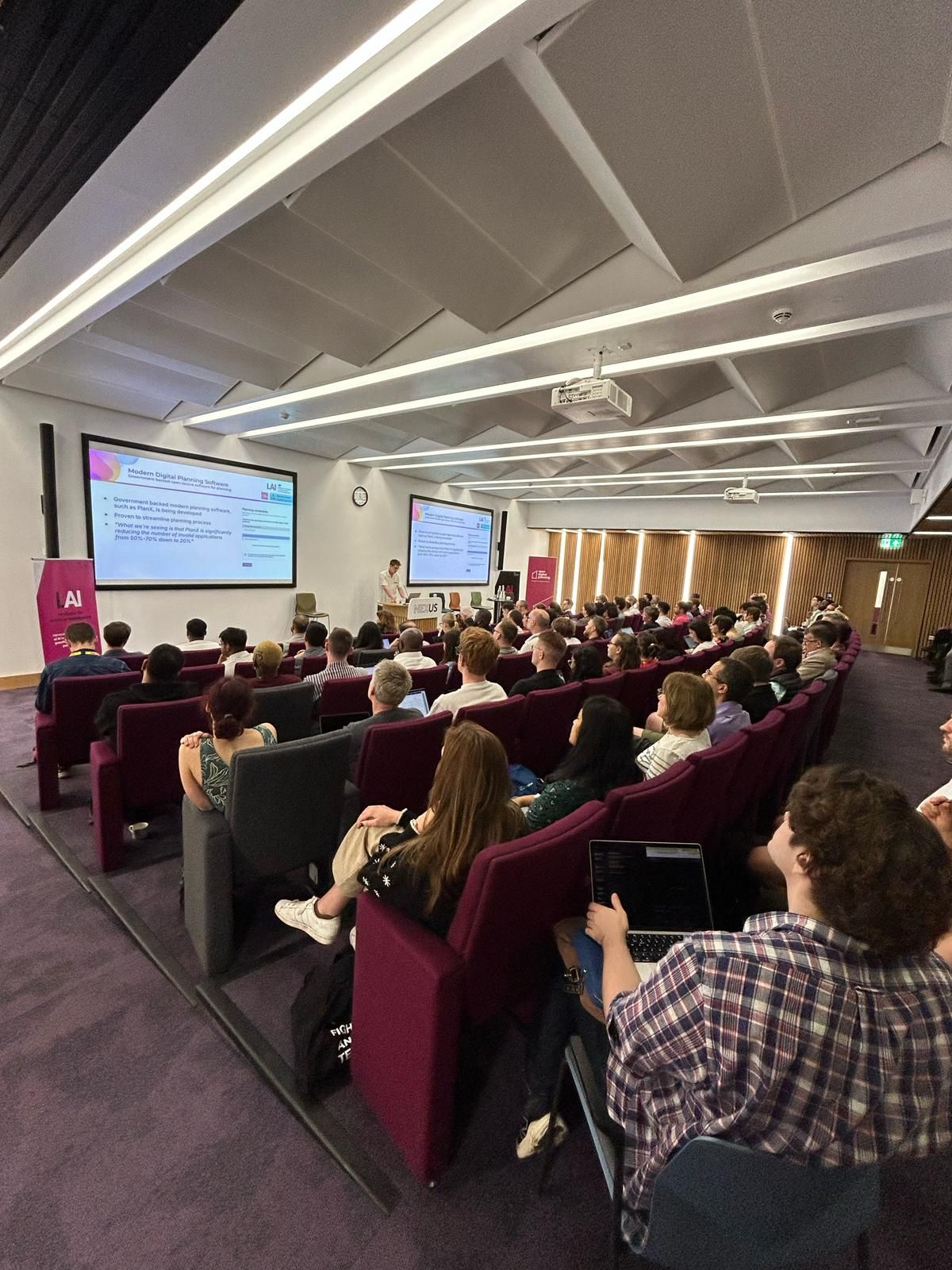
As inspiration for attendees, i.AI presented Extract, our current project leveraging AI to improve planning. Extract is an innovative AI tool designed to unlock the planning system by transforming outdated documents into actionable data. It streamlines processes for local councils, helping them adopt modern planning tools and enhance their digital capabilities. Find more on Extract here.
i.AI’s role
i.AI were keen to empower participants to leverage AI in their solutions. We set out to do this by collating the data sets that would be readily available and most useful to participants to build solutions from, including:
- API links and instructions for how to access them.
- Example code for downloading datasets.
- Direct access to LLMs.
We also provided a guide, including inspiration for project ideas.
If you want to challenge yourself to build out your own solution, you can find the datasets here: https://github.com/i-dot-ai/local-gov-hack We really encourage interested parties to make use of this and continue to build on this initial work.
A Diverse Team building Diverse Solutions
One of the most exciting aspects of the hackathon was the incredible mix of skills and experience present. Teams were formed with a blend of technical expertise (AI engineers, data scientists, software developers) and planning knowledge (policy advisors, local government officers, urban designers). This cross-disciplinary collaboration was crucial for generating innovative and practical solutions.
We were particularly delighted to welcome many first-time hackathon participants. Their fresh perspectives and enthusiasm, combined with the experience of seasoned professionals, created a dynamic and productive environment. It was inspiring to see individuals from different backgrounds and skill sets come together to learn, share ideas, and build something truly impactful.
i.AI's Commitment to Action
We were particularly excited by this opportunity because it aligns with two large government priorities: The AI Opportunities Action Plan and the Blueprint for Modern Digital Government. The Action Plan recommended identifying a series of quick wins to support the adoption of a scan, pilot, scale approach to public sector AI. DSIT identified running mission-aligned hackathons as one such quick win, hence last week’s focus on planning; a fundamental pillar to the government’s first mission of driving economic growth.
GDS also outlined in the blueprint for modern digital government that it will work with local government, MHCLG and other departments to define new models for collaboration, aimed at improving outcomes for residents and reducing the financial burden on local authorities. The hackathon represents new possibilities of what this collaboration could look like.
A Glimpse of the Innovation
Over the course of the two days, the teams worked tirelessly to develop innovative solutions to the challenges they were presented with. The energy and creativity in the room were palpable, and the results were truly impressive. Some of the ideas included:
- Cleo: The winning project: An AI tool to take the raw data from “decisions notices” and turn this into an insight about the history of the site, allowing for faster, more informed decisions.
- Right-Hand Plan: A tool to augment the planning portal to include a pre-submission check of an application to assess which policies apply, the quality of the application, and the likely outcome.
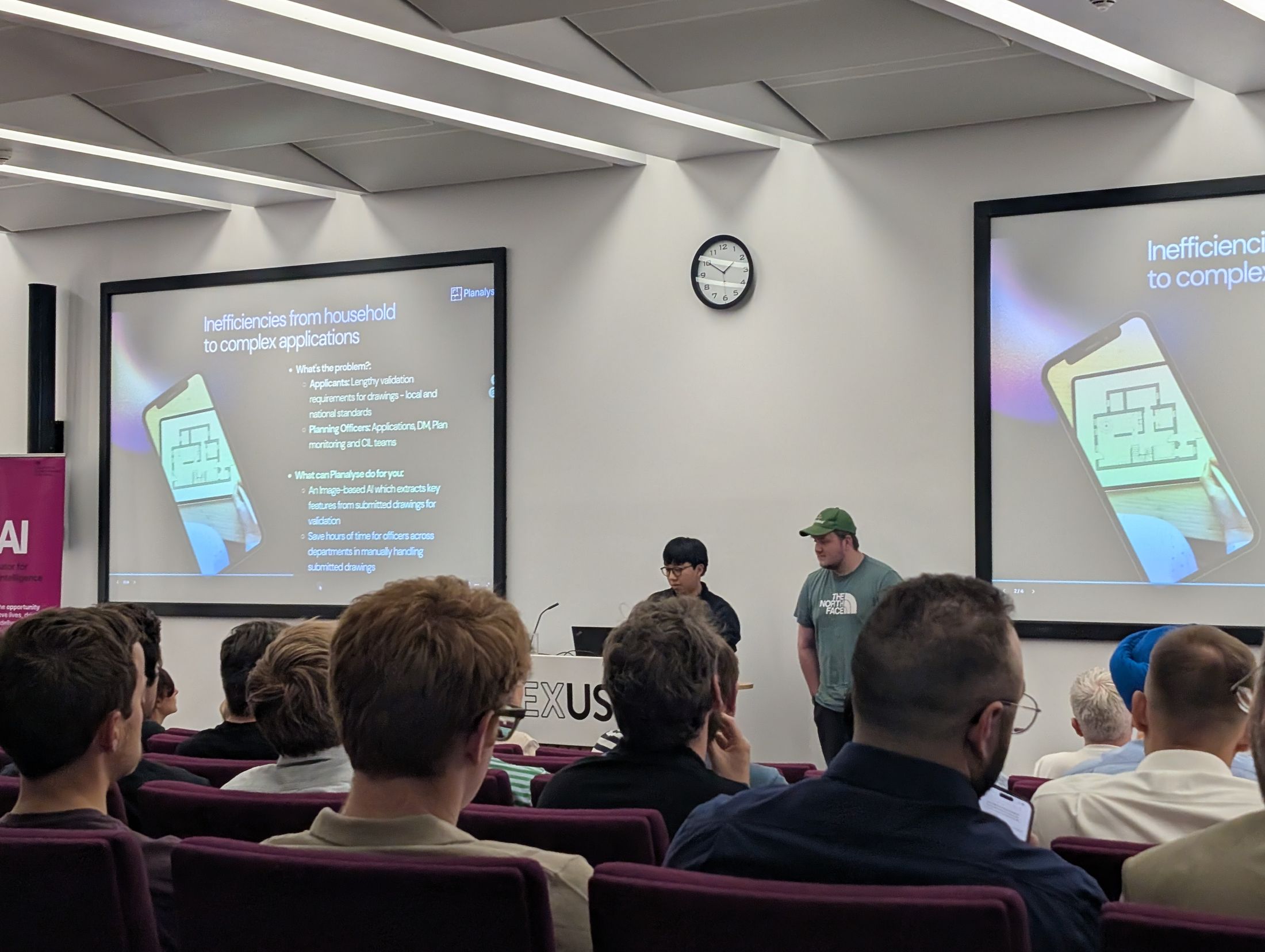
- Planalyse: An AI-powered, scalable floor-plan validation system that streamlines planning submissions by automatically extracting architectural elements, enforcing a customisable validation checklist, and quickly flagging missing information or discrepancies.
- ClearPlan: An AI-powered public engagement platform designed for clarity, relevance, and trust to transform public engagement by making planning clear, local, and responsive.
- InfraLab: A shared digital collaboration space designed to help planners and infrastructure stakeholders align earlier in the planning process, testing development scenarios and applying real policy and infrastructure constraints.
These are just 5 examples of the incredible work that was produced during the hackathon, 15 teams total provided solutions all of which provided something innovative. The projects demonstrated the power of AI to address key challenges in the planning system, from streamlining application processes to enhancing public engagement.
What Happens Next?
The hackathon was just the beginning, we believe that the "Hack the Planning System" hackathon has the potential to be a catalyst for real change in the planning system. By fostering collaboration, driving innovation, and embracing the power of AI, we can create a planning system that is fit for the 21st century and that delivers better outcomes for communities across the UK. Members of the i.AI team will also be meeting with the winning team and discuss further about their winning prototype.
A Big Thank You
We would like to extend our sincere thanks to all the participants, facilitators, mentors, and judges who made the "Hack the Planning System" hackathon such a success. Your passion, dedication, and expertise were instrumental in generating innovative solutions to some of the most pressing challenges facing the planning system.
We're excited about the future of digital planning and the role that AI can play in transforming public services. Watch this space for further updates on the progress of the hackathon projects and other i.AI initiatives!
Together, we can build a better future for our communities, one innovative solution at a time.