

Water voles are thriving in the South Downs National Park
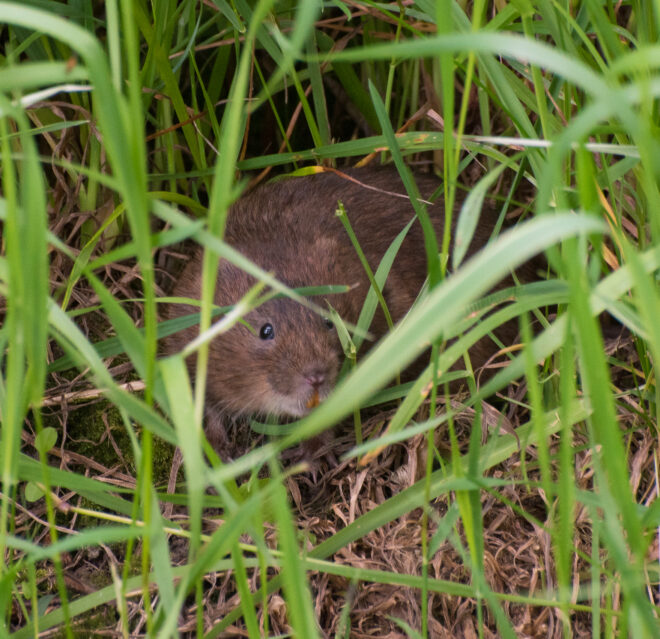
A water vole survey has revealed the species is thriving along a stretch of the River Meon at St Clair’s Meadow Nature Reserve.
Water voles are Britain’s fastest-declining mammal. Once widespread across the country’s rivers, streams and wetlands, they have declined due to habitat loss, pollution, agricultural pressures and predation by non-native American mink. National estimates now stand at between 58,000 and 186,000 individuals, making every stronghold for the species increasingly important.
The survey, carried out by Hampshire & Isle of Wight Wildlife Trust with the River Meon Conservation Volunteers, recorded extensive evidence of water vole activity including feeding stations and remains, burrow entrances and latrines.
The findings suggest a healthy and active population.
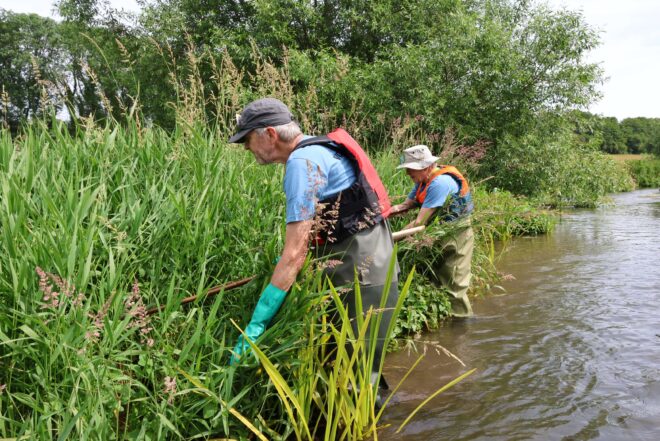
Andy Reeves, Reserves Officer (Central Rivers & Downs) for the Trust, said: “What makes a survey like this so exciting is seeing just how much evidence water voles leave as they go about their daily lives.
“Water voles can be difficult to spot, so we look for clues. Some of their green, tic-tac-shaped droppings have been flattened into what we call ‘trampled latrines’, where water voles stamp them down to scent mark their territory during the breeding season. Finding so many of these signs shows that the population is feeding, breeding and thriving here at St Clair’s Meadow Nature Reserve.”
The results reflect a wider encouraging picture emerging along the River Meon. A key reason for the species’ recovery on the River Meon has been the Meon Valley Water Vole Project. Launched in 2013 by the SDNPA and the Meon Valley Partnership, with support from Hampshire & Isle of Wight Wildlife Trust, the project saw more than 2,800 water voles released into the river.